
Thoughts of the Day 2026
01 Jan 2026 — In a small organisation of a few hundred people, Enterprise Architecture is of questionable value because the leaders can hold most of the organisation with clarity in their heads. It’s one reason why small organisations are able to be nimble. In a large organisation, Enterprise Architecture can bring that same clarity to the leaders.
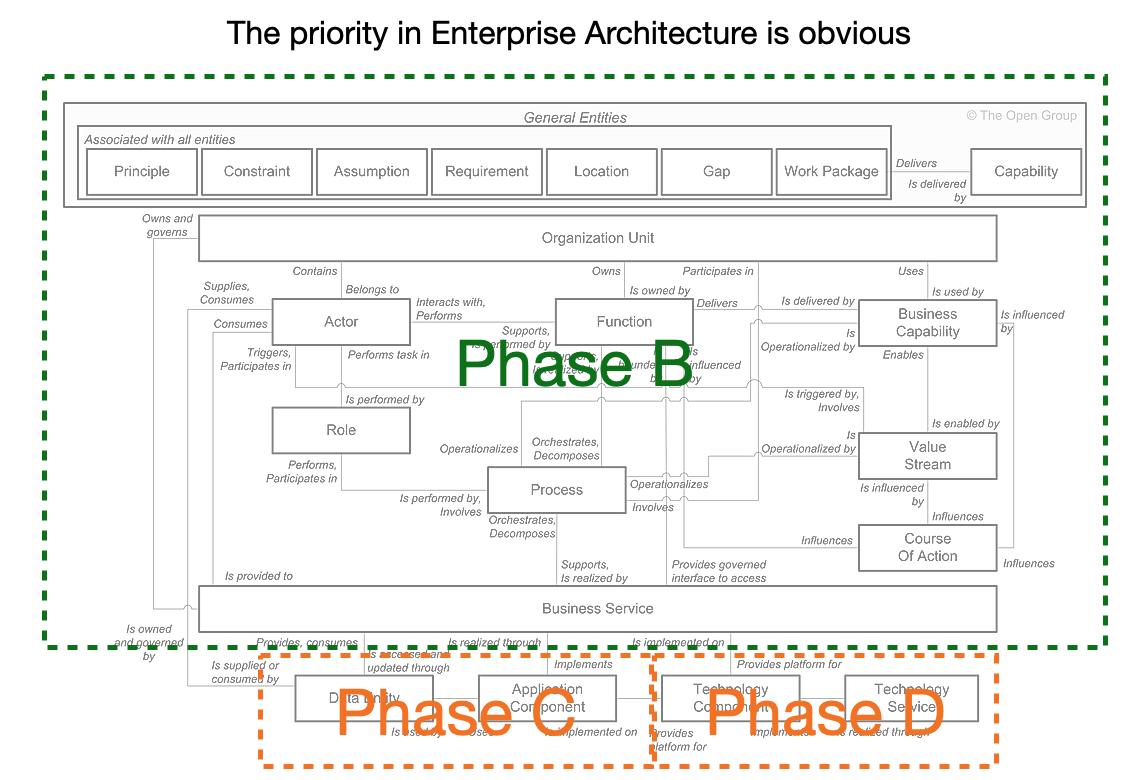
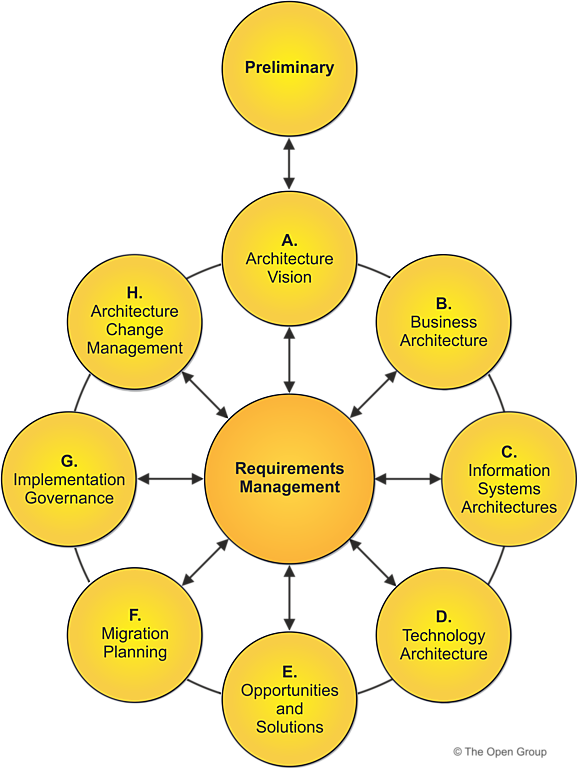
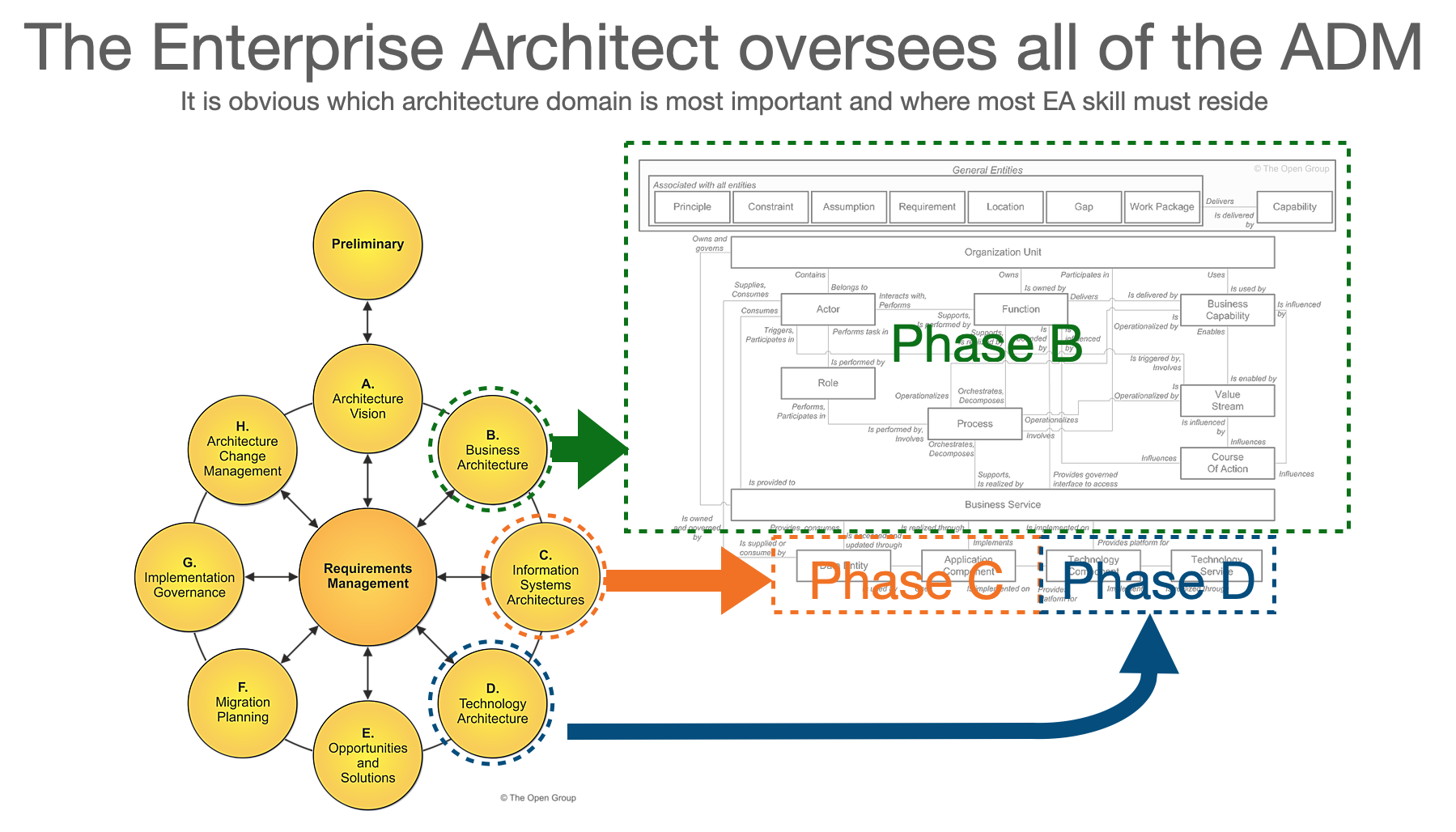
02 Jan 2026 — TOGAF ADM phases mapped to its metamodel.
03 Jan 2026 — “We are what we build.” — Lois Farfel Stark
04 Jan 2026 — There’s a particular kind of movie trope called Gather The Team and you’ve doubtless seen it many times. The protagonist has to spend a considerable amount of time finding the right people so all of their skills can combine to win the day. If some mysterious entity is filming an Enterprise Architect, they are making a Gather The Team movie.
05 Jan 2026 — Employees who have their fingers in many pies can be a sign of problems with the architecture. If the employee is one of the high-achievers, you might want to redesign the architecture around them. At the very least, they should be a go-to source to understand the reality of the operation.
06 Jan 2026 — Enterprise Architecture is not like Information Systems Architecture even though the latter is sometimes an output of EA.
07 Jan 2026 — When analysing the As-Is, it’s important to see things as they are not as the stakeholders claim them to be. Equally, the stakeholders might have a good reason to claim the As-Is doesn’t have the problems you can see. So you might need to be tactful.
08 Jan 2026 — At least of third of architecture is about communication. Your stakeholders need to understand you. By far the easiest way to ensure better understanding is to purge buzzwords and obscure terms from your language.
09 Jan 2026 — TOGAF Business Architect needs different skills and is a more senior role than Business Analyst. The role works with senior management to define the structure of the organisation.
10 Jan 2026 — “But perhaps to the inexperienced it will seem a marvel that human nature can comprehend such a great number of studies and keep them in the memory. Still, the observation that all studies have a common bond of union and intercourse with one another, will lead to the belief that this can easily be realised. For a broad education forms, as it were, a single body made up of these members. Those, therefore, who from tender years receive instruction in the various forms of learning, recognise the same stamp on all the arts, and an intercourse between all studies, and so they more readily comprehend them all.” — Vitruvius, The Ten Books on Architecture
11 Jan 2026 — Plans are worthless but planning is essential. In a small organisation of a few hundred people, Enterprise Architecture is of questionable value… unless that organisation is in a complex situation such as high regulation or rapidly changing markets. Then Enterprise Architecture is of unquestionable value.
12 Jan 2026 — Why does it make sense for the Enterprise Architecture team to be placed under the CFO? Because most decisions about what to build within the enterprise come down to Finance. It needs to make financial sense to spend money building a new part of the enterprise, it needs to make financial sense to operate and it needs to have a known relationship with revenue.
13 Jan 2026 — You cannot guarantee a proposed architecture will deliver, you can only guarantee that it fits the current situation and appears to be possible to build.
14 Jan 2026 — Find beauty in the architecture. If you cannot find beauty in it, maybe it is your job as an architect to put some in there?
15 Jan 2026 — Every architectural change involves investment and, the bigger the investment, the more risk there is involved. Large investment usually means longer to deliver the intended outcome. But, while the architecture might be perfect, the environment *will* shift before the build is completed. That shift may or may not leave you with a need to change or even scrap the build.
16 Jan 2026 — What is the difference between Process Architecture and BPMN? Process Architecture involves the use of all of the metamodel whereas BPMN is only used to describe a things inside one of its elements.

17 Jan 2026 — “You miss all of the interesting stuff if you use the past to predict the future. It just doesn’t.” — Scott Adams
18 Jan 2026 — Different people use different kinds of cognition. If there’s one lesson we have learned from LLMs it’s that verbal cognition leads to hallucination. That appears to be as true in humans as in AI. As an architect, you have all the right things around you to learn to be a visual thinker. Mind Maps directly correlate with the way Enterprise Architecture works so maybe start there.
19 Jan 2026 — As an Enterprise Architect, you need to be the person most directly plugged-in to objective reality.
20 Jan 2026 — Enterprise Architecture itself requires complete honesty. Whereas dealing with stakeholders requires tact. These two can come into conflict and it’s part of your job to ensure they don’t. Your tact must always be based on the truth if you want your stakeholders to be happy.
21 Jan 2026 — Even the most allegedly technically-led organisation is really psychology-led under the surface. Which means an Enterprise Architect must have an understanding of Psychology.
22 Jan 2026 — Business Process + Data —> Information
Data when it goes through a business process can become information and business processes can create a ton of information on their own. What’s the difference between data and information? Data is the raw stuff whereas information informs.
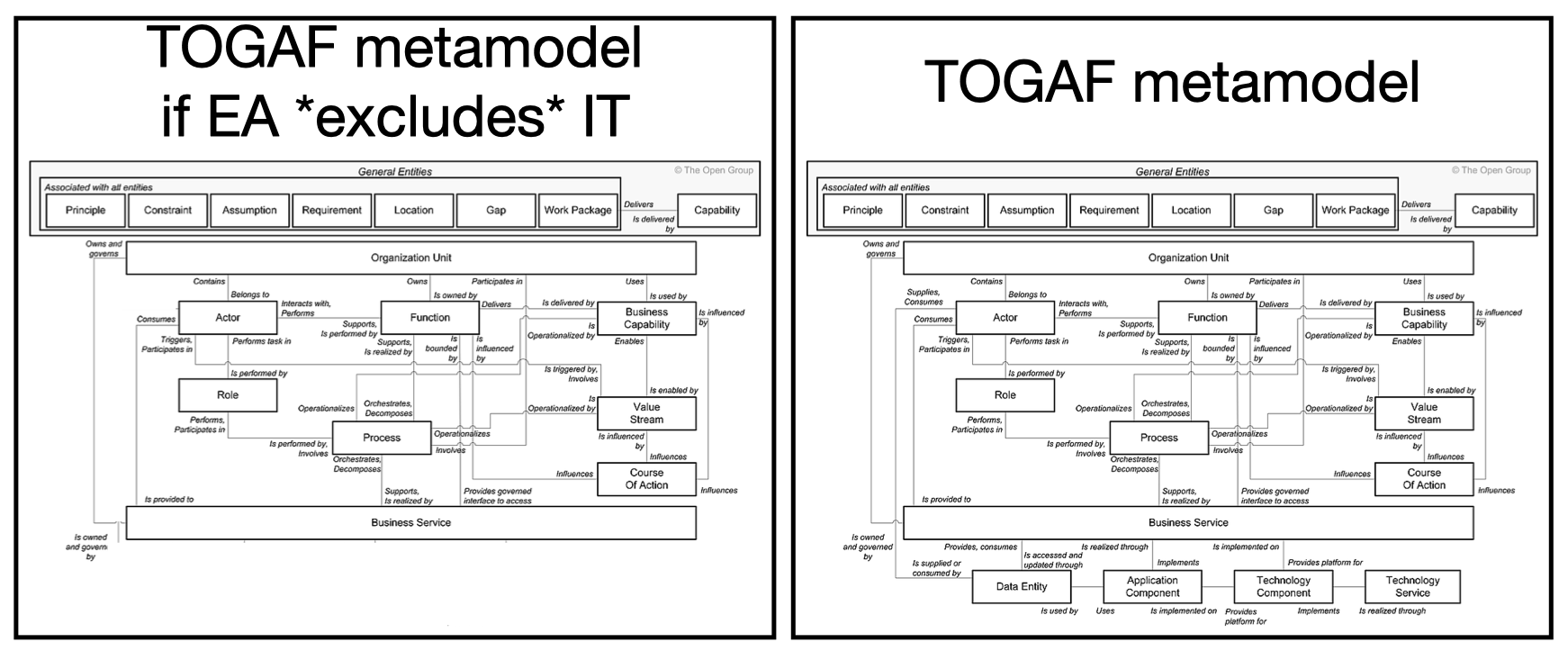
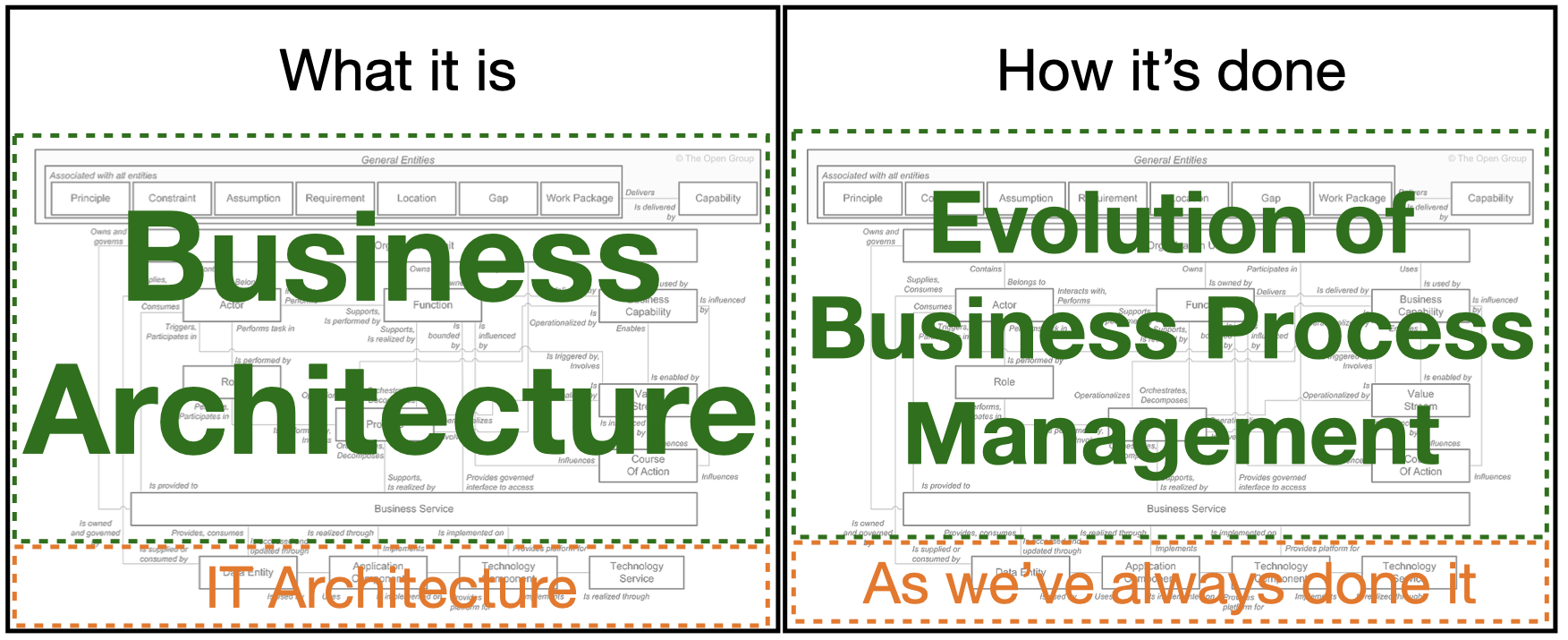
23 Jan 2026 — Enterprise Architecture is about the design of the structure of the enterprise. When you take all of the IT out of TOGAF, it stays almost the same.
24 Jan 2026 — “In reality, the apparent ‘objectivity’ of modern architecture is merely a mysticism in reverse, a congealed sentimentality disguised as objectivity; moreover one has seen often enough just how quickly this attitude is converted, in its protagonists, into the most changeable and arbitrary of subjectivisms.” — Titus Burckhardt
25 Jan 2026 — One of the things you learn in the construction industry is not to mess around with language… to call a thing what it is because otherwise people can get injured or worse. The opposite happens with alarming regularity in business and IT. In business, that takes the form of supposed experts hiding their lack of skill behind shamanism… pretending they can make the lightning come if you just follow their rituals and pay them a big, fat fee. The IT side is even stranger. They also build shamanic rituals but they’re based on stolen terminology… attempts to mutate business terms to be about IT. They too pretend the lightning will come if you follow their rituals and also expect a big, fat fee. None of them are worth it. As an Enterprise Architect, you should strive to use simple language and deliver high value things that work by being grounded in reality.
26 Jan 2026 — Sooner or later, you’ll make a stakeholder angry. Sooner or later, a stakeholder will make you angry. As an Enterprise Architect, part of your job is to defuse that anger. The higher you get in the organisation, the more important this becomes.
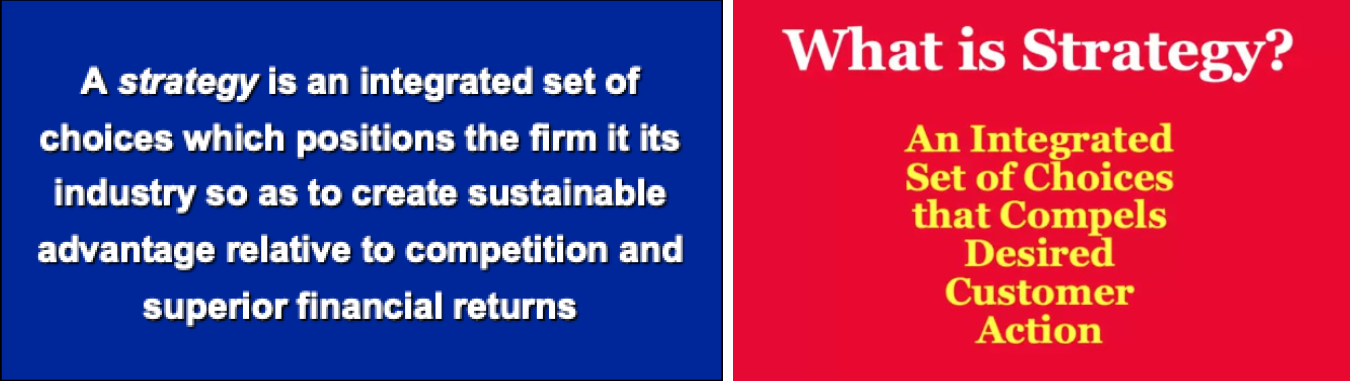
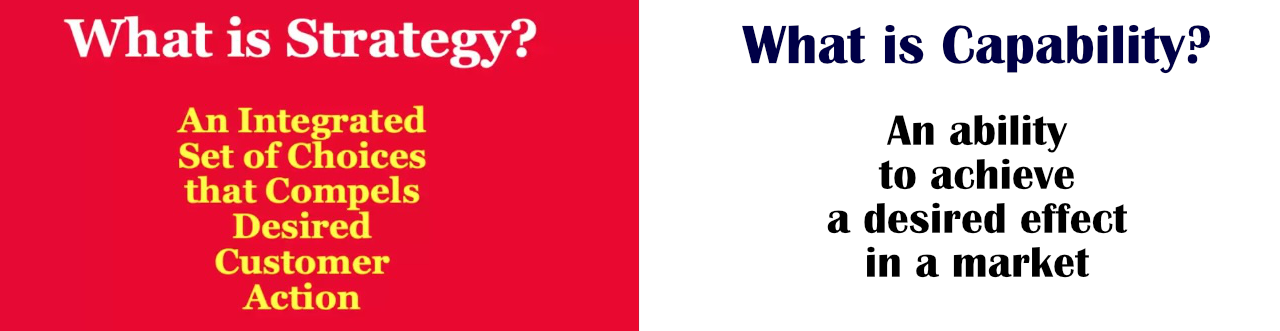
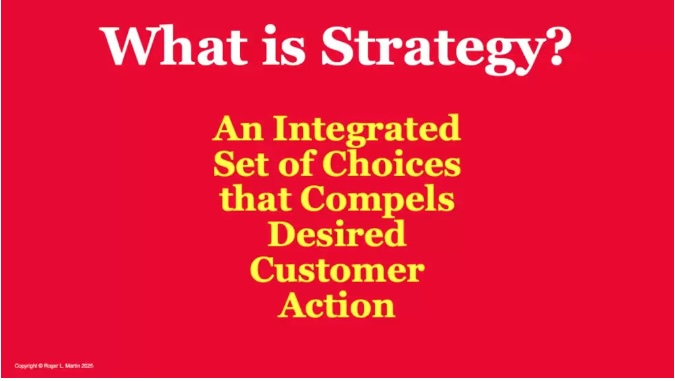
27 Jan 2026 — Below are two of the most popular definitions of Strategy. As an Enterprise Architect, part of your job is to make sure terms like Strategy are used correctly in your organisation. Clear terms with clear definitions lead to clearer thinking.
28 Jan 2026 — Why does Enterprise Architecture focus on management of complexity? Because if your organisation can do with 100 employees what its competitors cannot do even with 500, you win. If your organisation can do with 100 employees what its competitors need 150 to do, you win.
29 Jan 2026 — Many large organisations will distort the meanings of terms to fit what they already do rather than adopt new practices. Many employees assume the distorted term is the same as everyone else outside their organisation. This can lead to a lot of extra work for an Enterprise Architect on things like M&A.
30 Jan 2026 — Capability is the simple and direct link from Strategy to Execution.
31 Jan 2026 — “In a small room one does not say what one would in a large room.” — Louis Khan
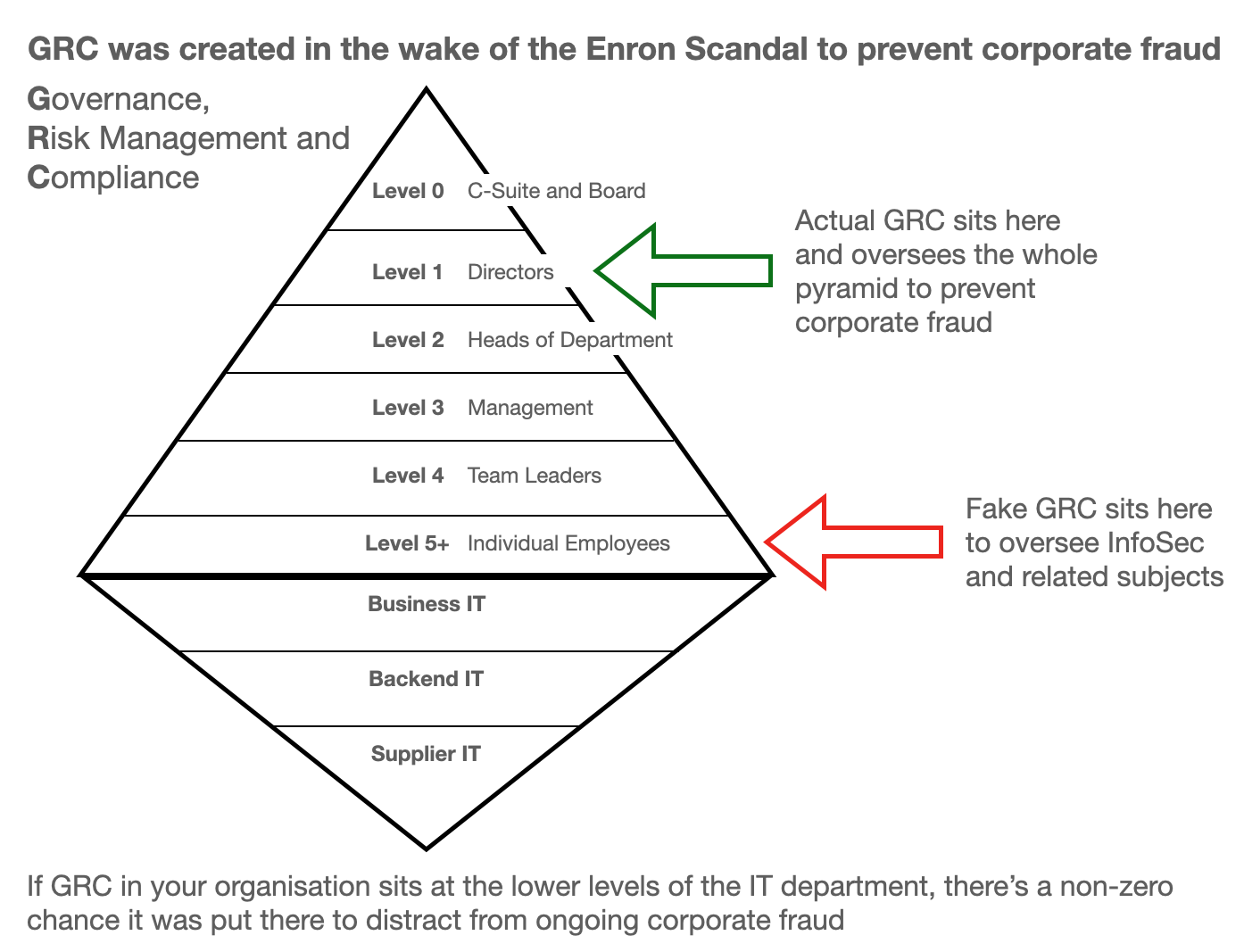
01 Feb 2026 — GRC — Governance, Risk Management and Compliance — was an approach created in the fallout of the massive scandal created by Enron. Its main purpose is to put mechanisms in place to prevent large-scale fraud in organisations. But, even thought GRC is a senior management approach, the term was steadily hijacked by junior IT people and today if you search for GRC you’re more likely to find shamanism about IT security. Part of me will always be deeply concerned… was that horrible distortion deliberately encouraged by people involved in large-scale fraud?
02 Feb 2026 — Learn to tell the difference between business outcomes and business optimisation. A business outcome is something that impacts the organisation’s activities in its markets. Whereas optimisation is an improvement to what the organisation does internally. Those two aren’t mutually exclusive but you as an Enterprise Architect will find many stakeholders who treat them as the same thing. Yet you must know the difference.
03 Feb 2026 — Everyone in your Enterprise Architecture team has strengths and weaknesses. It is your job to emphasise their strengths and, if possible, create an environment where their weaknesses are steadily reduced. An EA team with no significant weaknesses is usually better than one that has to highlight its strengths to cover its flaws.
04 Feb 2026 — Half of the battles you will face as an Enterprise Architect will be directly related to people doing non-jobs. They often don’t realise it’s a non-job but do always realise they have mortgages to pay and kids to feed. By far the best way to win the battles is to shift those people into real jobs where they have a direct relationship with revenue.
05 Feb 2026 — If someone is smart enough to learn shamanic rituals that don’t work, they’re smart enough to learn Enterprise Architecture which does work.
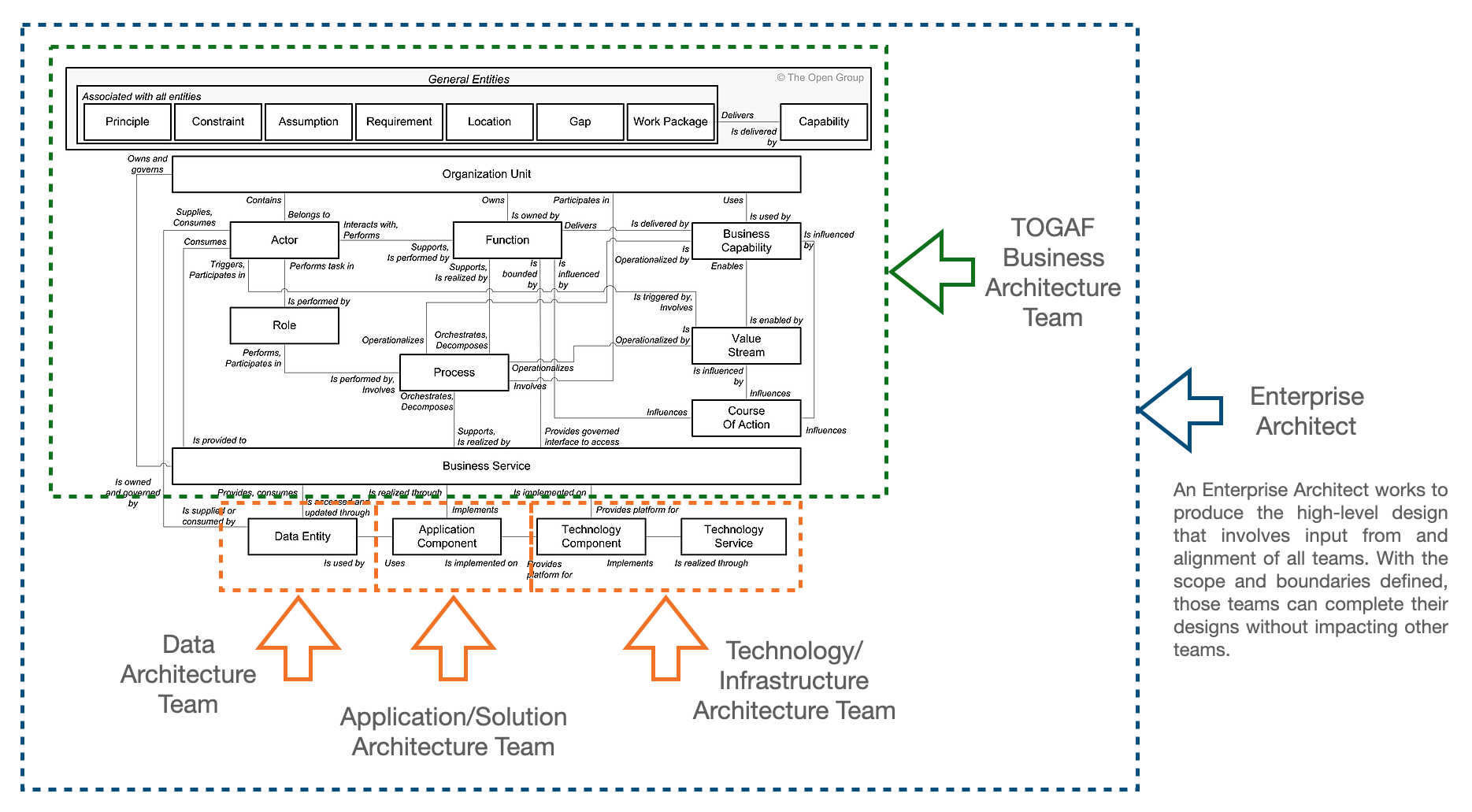
06 Feb 2026 — How does a metamodel work? It’s the next level up from a model and is about how things connect. For instance, Organization Unit is used to reproduce the org chart structure; teams, departments, business units, etc. Which means, as well as connecting to each other, an Organization Unit like a team can connect to Actors, Functions, Business Capabilities and Processes.

07 Feb 2026 — “An interesting plainness is the most difficult and precious thing to achieve.” — Mies Van Der Rohe
08 Feb 2026 — The bigger the difference between As-Is and To-Be, the more teething troubles you should expect. This is why it’s important to keep things simple. Lots of simple things instead of fewer complex things. Get the organisation working correctly before you try to optimise it.
09 Feb 2026 — It’s important to put your team in situations where they have to think their way out of it. Enterprise Architecture requires people who can rewrite the rules not just follow them.
10 Feb 2026 — Message-passing might count as the most important concept in Enterprise Architecture. It allows clear separation of concerns, works the same way humans do at a conceptual level and leads to a large number of beneficial effects in the architecture.
11 Feb 2026 — Flow as in flowchart helped progress our understanding for decades but it led us astray. Flow is not how things work in an organisation except in an abstract sense.
12 Feb 2026 — Don’t do architecture in any of the IT domains if you can make a vendor do that work for you for free. For instance, when you request information from an IT vendor, ask to see their architecture diagrams and documents for what they want to sell you. Even if they don’t already have those, they might well create them in the hope of a sale.
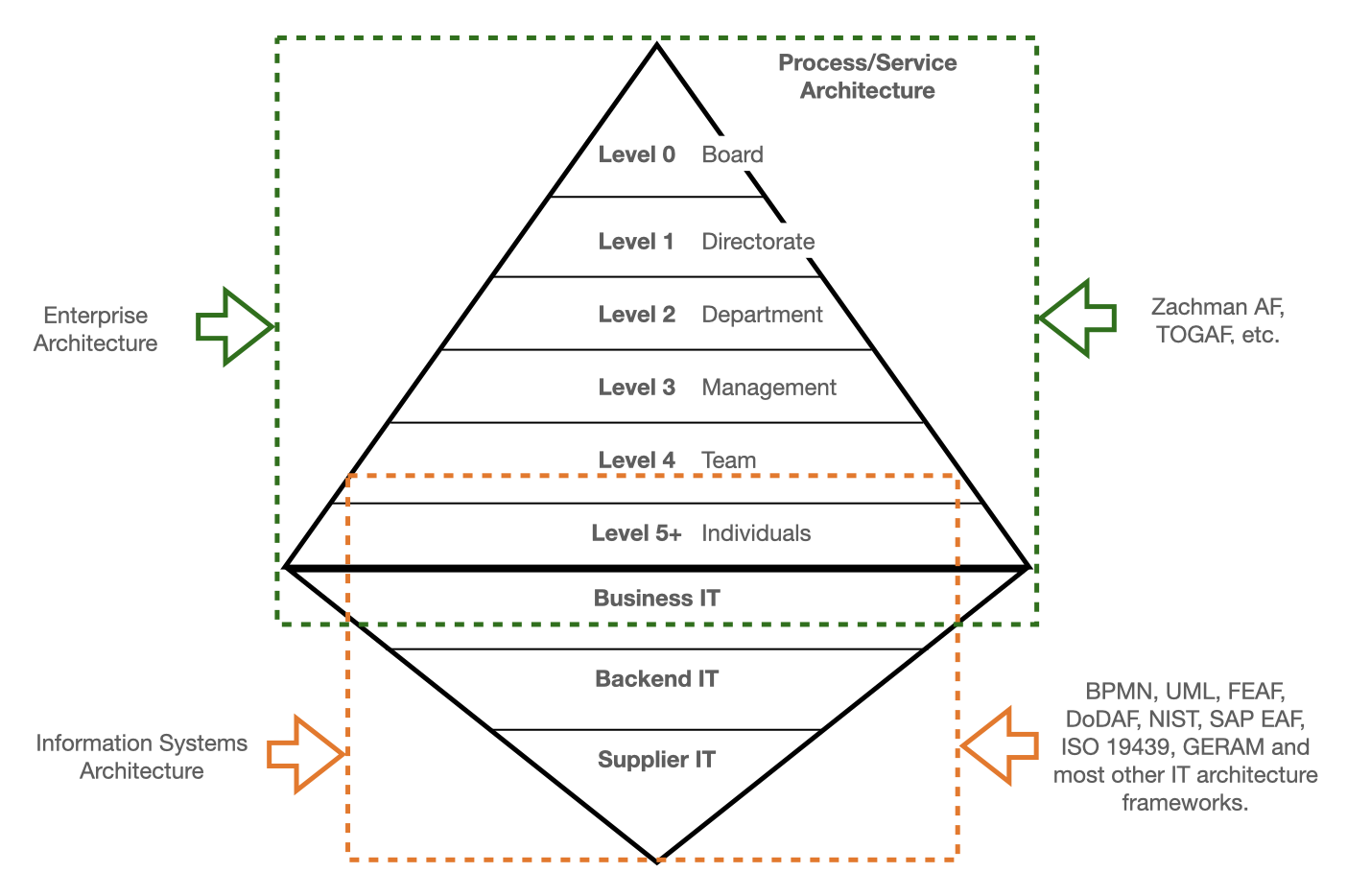
13 Feb 2026 — The overlap between Enterprise Architecture and Information Systems Architecture is fairly small. Enterprise Architecture is about the structure of the enterprise. Information Systems Architecture is about the structure of the enterprise’s IT systems. They are different things.
14 Feb 2026 — “Architecture excites our respect to the extent that it surpasses us.” — Alain de Botton
15 Feb 2026 — When a new senior manager comes in, a reorg usually follows not long after. Although junior employees dislike it, it’s normal, healthy and usually a good sign. You as an Enterprise Architect can and should take advantage of it and be there to help design the reorg. It’s a good time to build your relationship with the new senior manager and introduce them to the ways of architecture.
16 Feb 2026 — The cutting edge in AI is Zero Human Companies. It’s a fascinating concept with a major flaw: no one has found a way to make a profitable one. Even basic companies have too many gotchas. For ZHCs to be profitable, they might need customers who accept a whole different kind of products or services.
17 Feb 2026 — Enterprise Architecture has many parallels with building architecture. In both, the job is to create appropriate spaces for the future inhabitants.
18 Feb 2026 — Sooner or later, you’re going to get caught up in some office politics. As an Enterprise Architect, in theory you need to be neutral. But theory and practice are often not the same. So learn to be a diplomat. Spend plenty of effort learning to be one.
19 Feb 2026 — Should every MBA learn Enterprise Architecture? Yes. It’s the biggest leap forward in the design of enterprises in at least 30 years. An MBA proficient in EA will have a huge advantage over those that don’t and make better decisions.
20 Feb 2025 — Capability acts as a translation layer… a one-step way to convert strategy into execution.
21 Feb 2026 — “We form a mental map and then that shape shapes us” — Lois Farfel Stark
22 Feb 2026 — Human beings are not robots so you have to architect some slack into your organisation. However, you can’t just have people doing non-jobs. That means you need to use your creativity and make sure they do useful work that can be dropped relatively quickly. As always, the work should be tied to revenue generation.
23 Feb 2026 — It will be interesting to see how much of Enterprise Architecture is either confirmed or denied by Zero Human Companies. It will equally interesting to see how much EA prevents ZHCs from bloating or imploding like human companies. Will ZHCs without strong awareness of EA be doomed to fail or be massively outperformed by those with it?
24 Feb 2026 — Different experts don’t just work in different domains, they work at different levels. The majority only work at the bottom few levels. By the time you get up to Level 3, only the Process Architect (TOGAF calls it Business Architect) and Enterprise Architect remain.
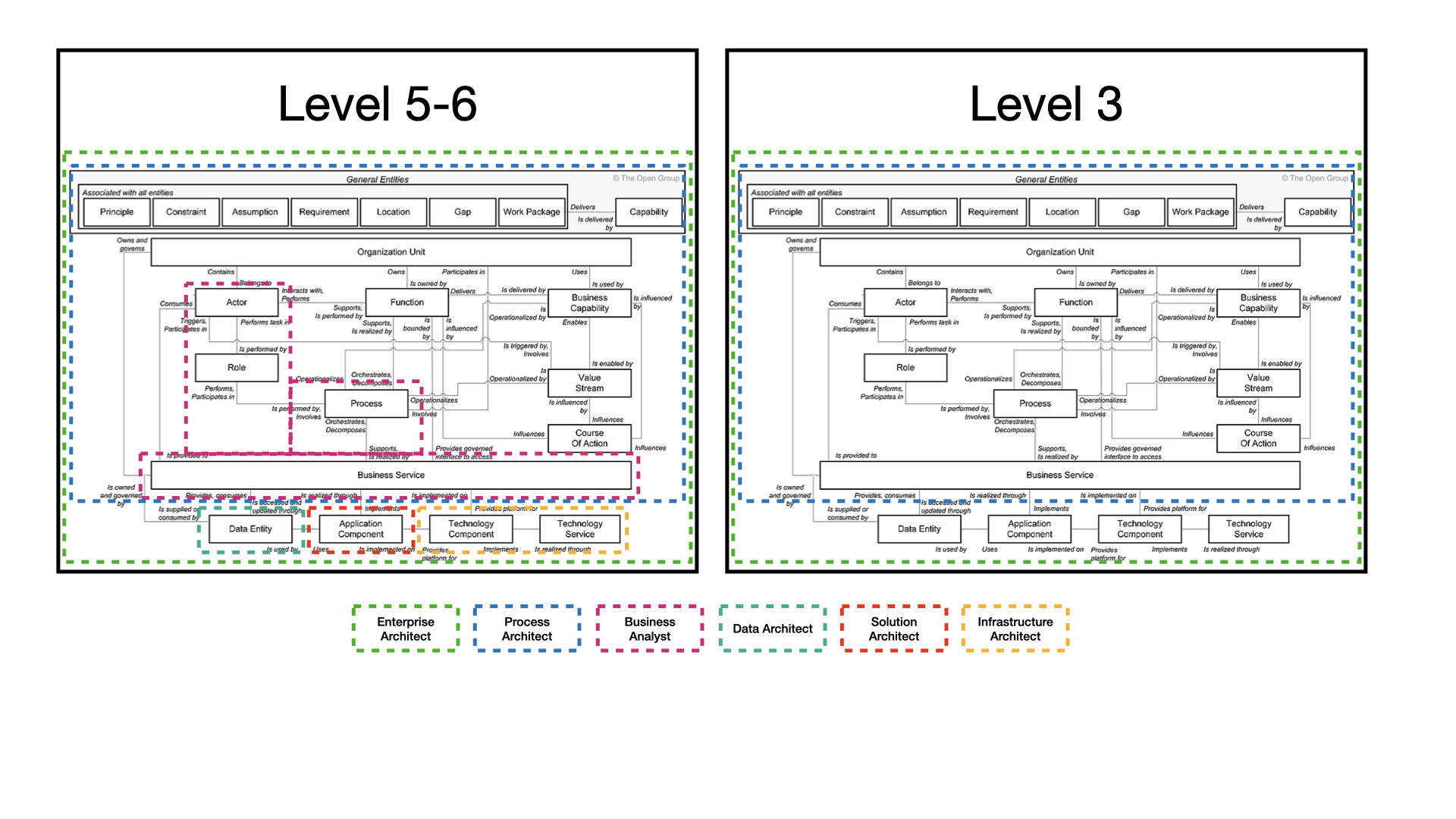
25 Feb 2026 — What do you architect? A huge number of people architect nothing and instead are part of a governance or management function. It shouldn’t have to be said but, if they architect nothing, they’re not an architect. To be an Enterprise Architect means to architect an enterprise.
26 Feb 2026 — If you understand and like a theory, it doesn’t mean the theory is true or applies to reality. As an Enterprise Architect, you must be prepared to throw away most theories. Even many you understand and like.
27 Feb 2026 — Enterprise Architecture is primarily concerned with the structure of the enterprise. The enterprise structure is formed of multiple different types of hierarchy — some real, some notional.

28 Feb 2026 — “Architecture is the backdrop to our lives” — Matthew Rice
01 Mar 2026 — There a real parts of a metamodel and notional parts. The real parts are things like Process, Org Unit and Service. They’re tangible things that experts can build. The notional parts are things like Role, Function and Capability. They don’t actually exist. You can’t poke one with a stick. What they do is act as glue for the real parts.
02 Mar 2026 — In Enterprise Architecture, there are two types of decisions for a stakeholder: those they want to make themselves and those they are happy to delegate. Being a good Enterprise Architect is in large part about helping the stakeholders discover which decisions are which.
03 Mar 2026 — Enterprise-scope IT and Enterprise Architecture are two different subjects with a small overlap. Historically and to this day, IT people confuse the two. Even to the point of IT people having written IT frameworks and standards codifying their confusion. But an enterprise is a legally defined thing and it has a structure which can be architected.
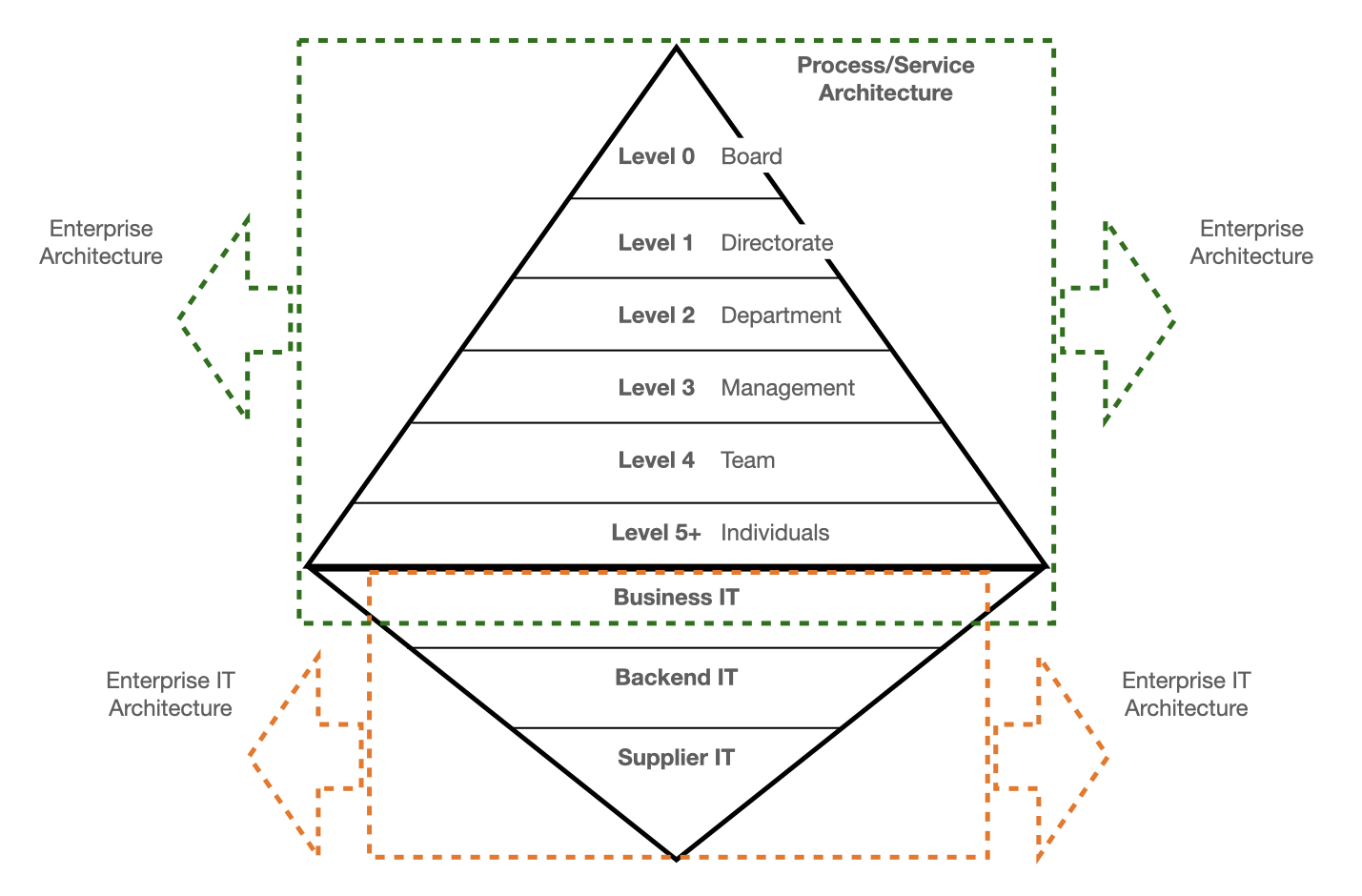
04 Mar 2026 — In TOGAF, if you don’t have an Enterprise Architect and instead only have a Business Architect, Data Architect, Application Architect (Solution Architect) and Technical Architect, it is the Business Architect who would be the most senior. By far.
05 Mar 2026 — Even though the best place for employees is somewhere with a direct connection to revenue generation, that is not where the Enterprise Architect is sat.
06 Mar 2026 — Under the bonnet, the Zachman Framework and TOGAF work in both different and similar ways. For instance, the How column in ZF directly maps to the Process metaclass in TOGAF and the latter is used to reproduce the same kind of levels of abstraction. The rest of the columns in ZF can also be mapped across to TOGAF.

07 Mar 2026 — “The most important part of design is finding all the issues to be resolved. The rest are details.” — Soumeet Lanka
08 Mar 2026 — Strategy is fundamentally non-deterministic because you can influence but cannot control customers or markets. Whereas what is inside your organisation is often most profitable if it can be made deterministic and routine. Enterprise Architecture provides a link between those two worlds.
09 Mar 2026 — TOGAF is an Enterprise Architecture framework. Look at the TOGAF Architecture Development Method. Do you see Enterprise Architecture on it? No. That’s because the Enterprise Architect oversees all of the ADM.
10 Mar 2026 — An Enterprise Architect is effectively a Process Architect (TOGAF calls it Business Architect) who also understands the IT domains to a decent extent. The other way around does not work. An IT architect who understands the business domain to a decent extent is still an IT architect because Process Architecture is 75%+ of the job.
11 Mar 2026 — As the amount of AI-written code increases in your environment, your number of unknown security risks increases with it. If the human programmers driving the AI are not security-aware, the increase in risk is even greater.
12 Mar 2026 — Neither high cashflow nor high revenue are a replacement for profitability. Companies that make no profit will always be either prey for acquisition at best or winding-up if investors decide the potential profit can never be realised.
13 Mar 2026 — Enterprise Architecture changed almost everything that happens before the IT work begins and almost nothing about the IT work except the IT teams get better information up front and far fewer disruptive or nonsense requests.
14 Mar 2026 — “But I don’t understand. Why do you want me to think that this is great architecture? He pointed to the picture of the Parthenon.
That, said the Dean, is the Parthenon.
– So it is.
– I haven’t the time to waste on silly questions.
– All right, then. – Roark got up, he took a long ruler from the desk, he walked to the picture. – Shall I tell you what’s rotten about it?
– It’s the Parthenon! – said the Dean.
– Yes, God damn it, the Parthenon!
The ruler struck the glass over the picture.
– Look,- said Roark. – The famous flutings on the famous columns – what are they there for? To hide the joints in wood – when columns were made of wood, only these aren’t, they’re marble. The triglyphs, what are they? Wood. Wooden beams, the way they had to be laid when people began to build wooden shacks. Your Greeks took marble and they made copies of their wooden structures out of it, because others had done it that way. Then your masters of the Renaissance came along and made copies in plaster of copies in marble of copies in wood. Now here we are, making copies in steel and concrete of copies in plaster of copies in marble of copies in wood. Why?” — Ayn Rand, The Fountainhead
15 Mar 2026 — “The quicker the phone is picked up by Sales, the slower it is picked up by the Helpdesk.” Part of your job as an Enterprise Architect is to know about traditional problems like that famous quote. Part of your job is to know that sales are what leads to employees getting paid. Part of your job is also to know about the fact customers are far more loyal to a company that has an excellent Helpdesk. Part of your job is to work with the stakeholders to resolve the tension between two competing interests.
16 Mar 2026 — Learn to speak simply, clearly and only use jargon if your stakeholders already use it. Enterprise Architecture has three value stages — Negotiate >> Design >> Communicate. In order to negotiate and communicate, you must be understood.
17 Mar 2026 — The first three phases of the TOGAF ADM are to set up the architecture team, to build the Vision then use the Vision to start the Business Architecture. That means you must have a Vision of what you and your stakeholders want the structure of the business to become.
18 Mar 2026 — Anyone who wants to become an Enterprise Architect should learn to code a decent size app in Erlang. A message bus or group chat app or something like that. Not to deploy into production but for the mindset it will instil. Enterprises are not software systems and people are not robots but, of all programming languages, application architectures in Erlang are probably the closest to the human structures we call enterprises.
19 Mar 2026 — If your organisation has not implemented a Zero Trust security policy, the advent of AI-driven malware means it is only a matter of time before you have a major security incident.
20 Mar 2026 — The Zachman Framework can act like a lens. Each row is a different kind of abstraction. Point it at something and fill in the blanks to understand that something. It was the start of the shift towards being able to architect an enterprise.

21 Mar 2026 — “We must consider the building not as an object but as a collaborative system tightly linked to its natural environment; an ecological niche.” — Neri Oxman
22 Mar 2026 — If you haven’t worked for many companies, Enterprise Architecture can be a struggle. You need to see lots of things working (or failing) in lots of different ways. If you can’t do that, the next best thing is to spend plenty of time with people who have worked in other companies. Listen to their stories and learn from them.
23 Mar 2026 — Your first complete model of an enterprise might take you years. Especially if no one else sees value enough in it for a budget. Your second complete model will be faster. When you are on your fifth or sixth enterprise, you should be able to have something useful within a month.
24 Mar 2026 — Data integration and enterprise integration are two different subjects. It’s comparatively easy to integrate data between two disparate parts of an enterprise whereas it can take years to integrate them.
25 Mar 2026 — Will Zero Human Companies replace human ones? Some, yes. But they’re more likely to create companies that humans could not. Human companies are more likely to be the main customers of ZHCs than be replaced by them.
26 Mar 2026 — You might not like office politics but a good Enterprise Architect has to build skill in and be sensitive to it. Enterprises are human endeavours which means office politics will be a factor whether you like it or not. Personalities will clash. The higher you go in an organisation, the strong those personalities. A good Enterprise Architect has enough skill in office politics to safely negotiate with them.
27 Mar 2026 — Enterprise Architecture and Information Systems Architecture are two different subjects. EA can be used to help decide what information systems are needed. How? Because an enterprise has an architecture and, if you understand that architecture, you can help to decide all kinds of things like the structure of the people, what resources are needed, and so on.

28 Mar 2026 — Almost all of the value Enterprise Architecture has to Strategy comes from Impact Assessments. To do them, you must have a complete model of the enterprise.
29 Mar 2026 — Most of the reputation of Enterprise Architecture comes from people who do not understand it. For instance, Architecture Review Boards and Technical Design Authorities are signs of that failure. They show an architecture team that doesn’t have a model of the enterprise. How? ARBs and TDAs are at the end of the design phase which is the wrong place. They police the architects after the design is done. In Enterprise Architecture, correct use of impact assessments and the model makes ARBs and TDAs redundant because the correct direction and scope are set before the design phase.
30 Mar 2026 — Reality beats theory every time. If you look at a theory and it doesn’t match the reality of your enterprise, you should probably bin it until you know for sure how it is suppose to work. Unless it works for a lot of others and provides them an advantage, maybe you’ll never need it?
31 Mar 2026 — Some things in Enterprise Architecture you have to work backwards. When you know an architecture technique works but don’t know why, you might have to simply go with it and hope you learn why later. It’s never nice and should always feel uncomfortable but pragmatism must come first.
01 Apr 2026 — Enterprises are not software systems and people are not robots so no amount of skill in IT can make an Enterprise Architect.
02 Apr 2026 — A complete model of the enterprise is the main signifier of an Enterprise Architect. In the same way that drawings of a complete building are the main signifier of a building architect.
03 Apr 2026 — Much of the confusion around Enterprise Architecture stems from several IT standards falsely claiming to be EA standards. Many claim there are historical justifications for their misnaming. But even if we forgive the mistakes of the past, there is no justification to carry on those mistakes in the present.
04 Apr 2026 — “Light must always win.” — Maurice Smith
05 Apr 2026 — Design of a metamodel needs to take at least four main factors into account: concepts, build skill, stakeholder visibility and simplicity. Concepts are the obvious — unique things like Process and Org Unit. Build Skill is less obvious — does your organisation have people who are skilled in those concepts, e.g. Service Design? If not and you try to use Service in your architecture, who will build it? Stakeholder visibility is whether or not your stakeholders will understand it if it is part of the eventual model because they are the ones who will approve the budget to build. Simplicity in the sense of the opposite of complexity. Complex metamodels leads to complex models that are hard to maintain.
06 Apr 2026 — How do you build a complete model of the enterprise? You start at the top and work your way down.
07 Apr 2026 — What is an Enterprise Architecture framework? It is an agreed way to do EA work. A frame for the work. You probably don’t need one because your organisation already does things in a specific way and you’re usually better off using that mature way of work.
08 Apr 2026 — How do you move dozens or even hundreds of solution architectures into a complete model of the enterprise? Unfortunately, it usually has to be done manually. What you will almost certainly find is many of the solution architectures will contradict each other and/or be inconsistent. Start by adding placeholders for solutions and only add detail if you need it.
09 Apr 2026 — Enterprise Architecture is a formal way to describe our ideas so the description can be used to build an enterprise.
10 Apr 2026 — Designs for applications and how they interact with the business are only one tiny part of Enterprise Architecture. Literally less than a twentieth of the job.

11 Apr 2026 — “There is an effective strategy open to architects. Whereas doctors deal with the interior organisms of man, architects deal with the exterior organisms of man. Architects might join with one another to carry on their work in laboratories as do doctors in anticipatory medicine.” — Richard Buckminster Fuller
12 Apr 2026 — Capability as a concept can be hard for people to grasp if their role only involves internal change within the organisation. This has led to several corrupted Capability “standards” that do not actually describe it. Instead they describe a compound concept similar to Function that simply combines Information/Data and Process. It’s an easy concept to grasp — especially for IT people hence its proliferation — but almost completely useless and can be replaced by simply using Process or a system. The real thing is for business leaders and about interaction with external markets, not internal change.
13 Apr 2026 — How you intend to use AI within your organisation is not strategy, it’s planning. Unless you’re talking about how AI will directly be a part of customer experience, you don’t have an AI strategy. And many companies don’t need one.
14 Apr 2026 — A complete model of the enterprise can be hard to create and almost as hard to maintain. People will need to keep it up to date otherwise it will rapidly become stale. It means you need to ensure architecture teams all switch from fragmented work to coherent work together.
15 Apr 2026 — Outside of the top levels of your organisation, unless it’s about the position of the organisation in its markets, any talk of “strategy” is an amateur use of the word. Learn about the real thing because it will help you and your organisation to win.
16 Apr 2026 — A lot of people who claim to be Enterprise Architects also complain they don’t have a seat at the table where decisions are made. To have a seat, you need to be valuable to those already at the table. If they were Enterprise Architects, they would have that seat. The main of the point of Enterprise Architecture is to seek out and produce value for the stakeholders at the table.
17 Apr 2026 — Should you learn how to edit or even create metamodels? Yes. As long as your EA tool supports it, the ability to do so will set you free. It allows you to make a metamodel that precisely matches an organisation and its way of working.

18 Apr 2026 — “Architecture is a social act and the material theater of human activity.” — Spiro Kostof
19 Apr 2026 — Enterprise Architecture is a game-changer for strategy development. Traditionally, strategy involved imprecise communication downwards to allow operational management to interpret it in a way that works best for their remit. But a strategy can have a poor fit to operational reality even when loosely worded. That poor fit can cause everything to fizzle out in middle management after millions have been spent. Enterprise Architecture helps ensure it will always be a good fit.
20 Apr 2026 — Information is that which informs. If you want good decisions to be made in your organisation, the information should be as accurate as possible. When it comes to information heading upwards, be wary of any “manual” changes. Those manipulations are where bad management decisions or worse can start.
21 Apr 2026 — Should your architecture be optimised for communication to decision-makers or optimised for project teams to deliver? Those can border on mutually exclusive. The answer is almost always for the decision-makers. You have time to make things clearer for project teams after the decisions are made.
22 Apr 2026 — If you only produce value for those more junior than you, you will not get a seat at the decision-making table. To get a seat at that table, you must produce value for those more senior than you.
23 Apr 2026 — While sometimes a devil in the details will trip you up, it is better to work fast. No stakeholder ever complains about Enterprise Architecture work being done too fast.
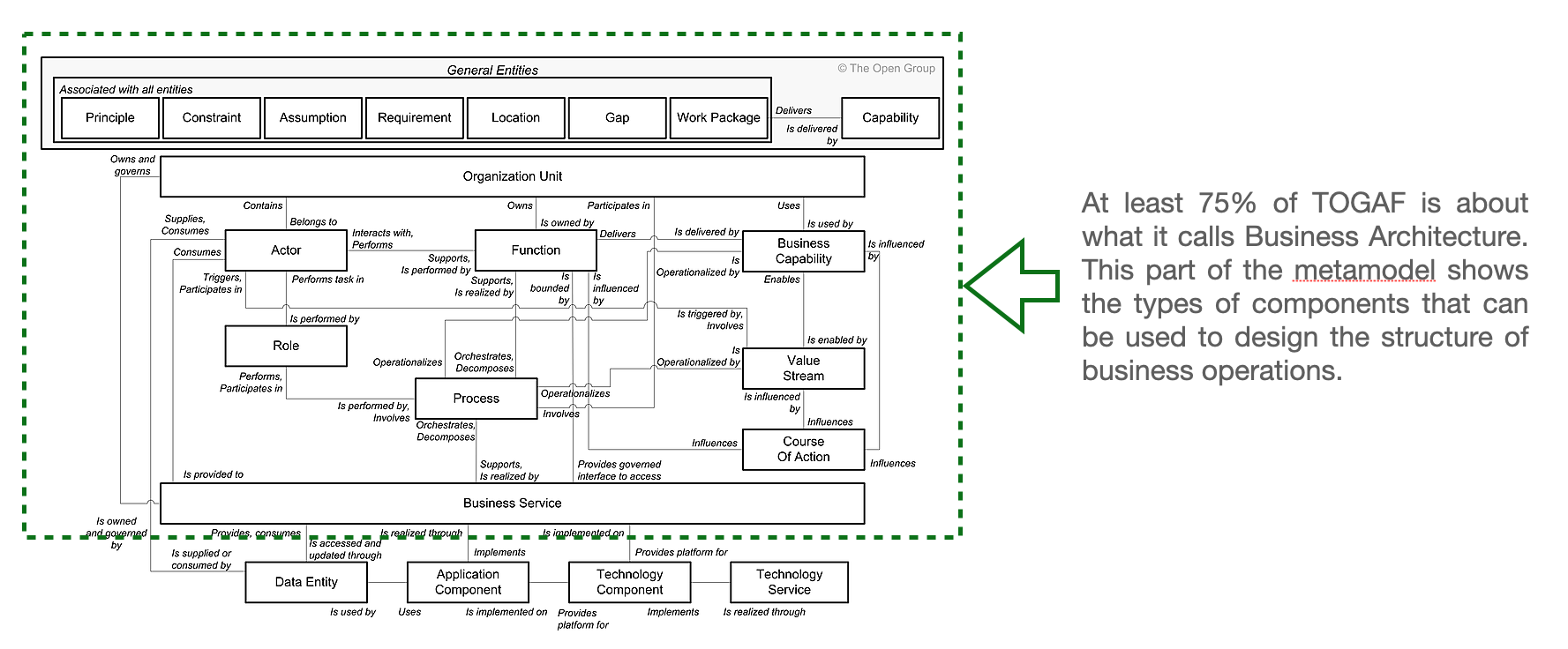
24 Apr 2026 — Business Architecture is nothing like TOGAF claims. What it calls Business Architecture is really Business Service Architecture which is a completely different subject. The real thing is about the structure of the business model. The below is from Roger Martin’s book Playing To Win and shows a high-level part of a Business Architecture.

25 Apr 2026 — “Cheops’ Law: Nothing ever gets built on schedule or within budget.” — Robert A. Heinlein
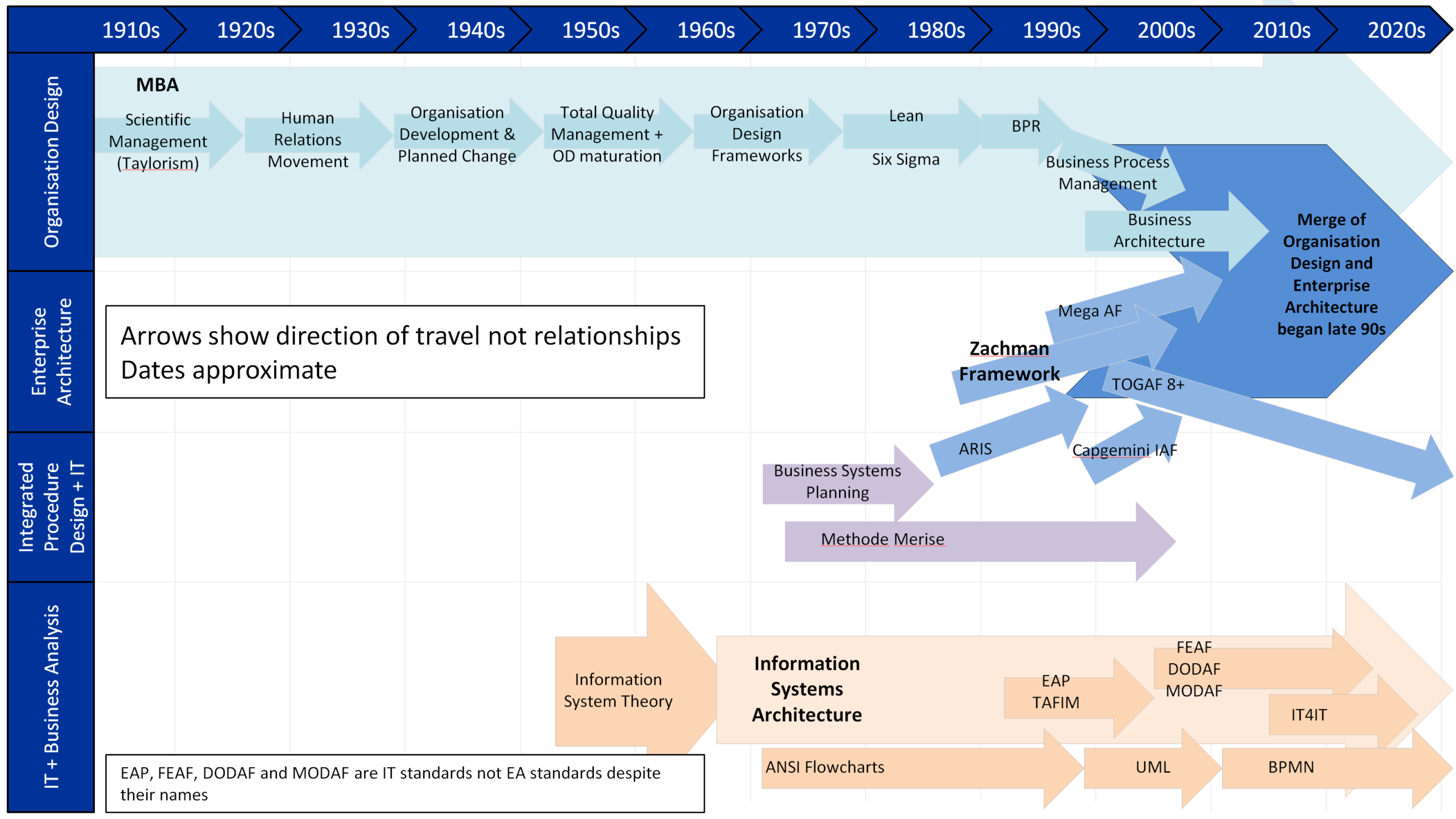
26 Apr 2026 — When the Zachman Framework met Methode Merise and ARIS, the Paris School of Enterprise Architecture was theoretically born. Theoretically because no one except me calls it the Paris School. Yet it is a distinct school of EA with its own way of architecting an enterprise. It was present by 1998 and mature by 2002. It hasn’t changed much since because it hasn’t needed to change. It can still describe any enterprise.
27 Apr 2026 — An Enterprise Architect must provide value to every director and department head.
28 Apr 2026 — Obviously, a model is not reality. But it is a representation of reality. An Enterprise Architecture model is a representation of the enterprise. The components of that model should be chosen to help make decisions before anything is built, help the builders know what to build, etc.
29 Apr 2026 — Enterprise Architecture can start anywhere. The baseline is to start with interpretation of corporate strategy into execution. But the majority of the work is usually Optimisation — improvement of current operations. That means the architecture work can start anywhere from the highest of high end to the tiniest little detail that will ripple upwards.
30 Apr 2026 — Sooner or later, office politics is going to catch up to you. The more senior you get — and an Enterprise Architecture should be close to the top — the more brutal the politics can get. A deeply cynical EA would make a list of all the key stakeholders and at least sketch a plan of what to do if ever on the wrong side of each… of how to at least try to turn it around. But you’re not that cynical, are you?
01 May 2026 — The structure of the Process or Service Architecture (what TOGAF calls Business Architecture) is by far the biggest part of the Enterprise Architecture.
02 May 2026 — “Architecture is too slow in its realisation to be a ‘problem solver’.” — Cedric Price
03 May 2026 — Sometimes cheap and dull but worthy work can be what puts your organisation ahead. One of the reasons Microsoft is a market leader is it produced good documentation and made it publicly available for free. That meant very little in the first few years. Except to Microsoft’s customers who could find documentation on most things they wanted to do. By the fifth year of doing it, when a few competitors realised, it was far too late for them to catch up. Microsoft had built a huge moat. When you have a quiet moment, you should look for cheap and dull but worthy things in your architecture and think if there’s a way to turn it into a moat.
04 May 2026 — In Enterprise Architecture, it is better to be fast and directionally correct than precise at least for the first few iterations through the design process.
05 May 2026 — Some “standards” are effectively useless. They’re often created by experts who don’t understand the context of what they do for a living because they work in large firms with an old-fashioned structure full of bureaucrats. It looks convincing because that’s how they retain their job but it’s really just busywork. There is no easy way to tell which standards are good or bad except through experience or understanding a broader context.
06 May 2026 — Enterprise Architecture is formulaic but the architecture itself must not be. That means you can learn the patterns of EA but you must engage your brain and break those patterns if it will give better outcomes.
07 May 2026 — Your architecture will be more likely to succeed if it is simple to understand.
08 May 2026 — A value stream is not a process. Some employees can be deeply involved in every value stage.

09 May 2026 — “On both sides of the highway I could see the rows of little frame houses, all alike, as if there were only one architect in the city and he had a magnificent obsession.” — Ross Macdonald
10 May 2026 — Does an Enterprise Architect make decisions for senior management and directors? Yes. But decisions are probably not what you think. Building architecture offers a good parallel. The customer might make the decision they want 3 bedrooms, a study and a basement along with dozens of smaller decisions. After dozens or even hundreds of questions, the building architect produces a design for the customer. That design incorporates all of the customer’s decisions. But the design also contains thousands of decisions made by the architect. Some of those the customer will disagree with. Others will inspire.
11 May 2026 — Why is it easier for a business person to become an Enterprise Architect than an IT person? Because the deck is stacked their way, e.g. in BDAT. The design of the business comes first and it’s most of the job. If you can already do most of the B, it’s far easier to learn enough DAT to understand those colleagues than to go in the opposite direction — which can certainly be done but it’s a lot more work.
12 May 2026 — Every organisation is different. What works in one might not work in another. The culture of one can be fundamentally different. That means an Enterprise Architect cannot blindly copy what another organisation does and must always think.
13 May 2026 — The value stream of Enterprise Architecture is
Negotiate >> Design >> Communicate
You need to be equally good at all three.
14 May 2026 — If it ain’t broke, don’t fix it. In theory, adoption of standards can improve things. In practice, if what you do right now works well, you’re putting it at risk if you try to replace it with a standard.
15 May 2026 — When an Enterprise Architect talks about an architecture model, it is in the same sense as a building architecture model.

16 May 2026 — “We used to build temples, and museums are about as close as secular society dares to go in facing up to the idea that a good building can change your life (and a bad one ruin it).” — Alain de Botton
17 May 2026 — Does an Enterprise Architect make decisions for senior management and directors? Yes. But decisions are probably not what you think. As an example, two senior stakeholders have made major decisions but there’s a big problem of some sort. The most common is the decisions have impacts that are too expensive. Your job as an architect is to find replacements for those decisions. New decisions that will still satisfy both stakeholders. Then you have to use your skill and tact to get those stakeholder to accept the new decisions.
18 May 2026 — If your organisation’s management makes all structural decisions about business operations then someone analyses their decisions so IT can find appropriate systems then your organisation is still working like it’s the early 1990s and is not using Enterprise Architecture no matter anyone’s job title. EA is when the structure of business operations is also architected. It brings big advantages to the organisation when all operational structures are architected as one.
19 May 2026 — If you can change your “capability” into something else just by reversing the name, guess what? It’s not a Capability. For instance, Quality Management can be reversed to Manage Quality. Which then makes it obvious it’s a Process Group and not a Capability.
20 May 2026 — As an Enterprise Architect, you must understand human incentives. What will make people want to turn up for work in your beautiful new architecture?
21 May 2026 — In Enterprise Architecture, there’s a big difference between structures that give you competitive advantage and structures where it might pay to work with your competitors so everyone gets an advantage. Knowing which is which can put you ahead over all.
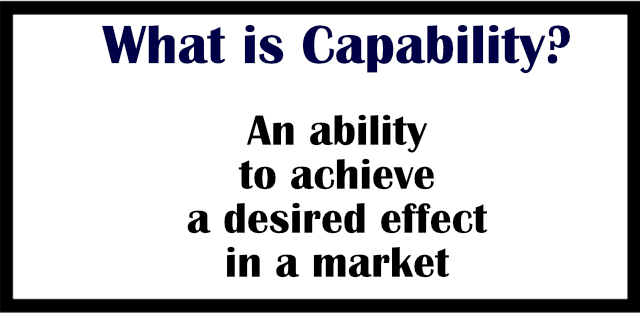
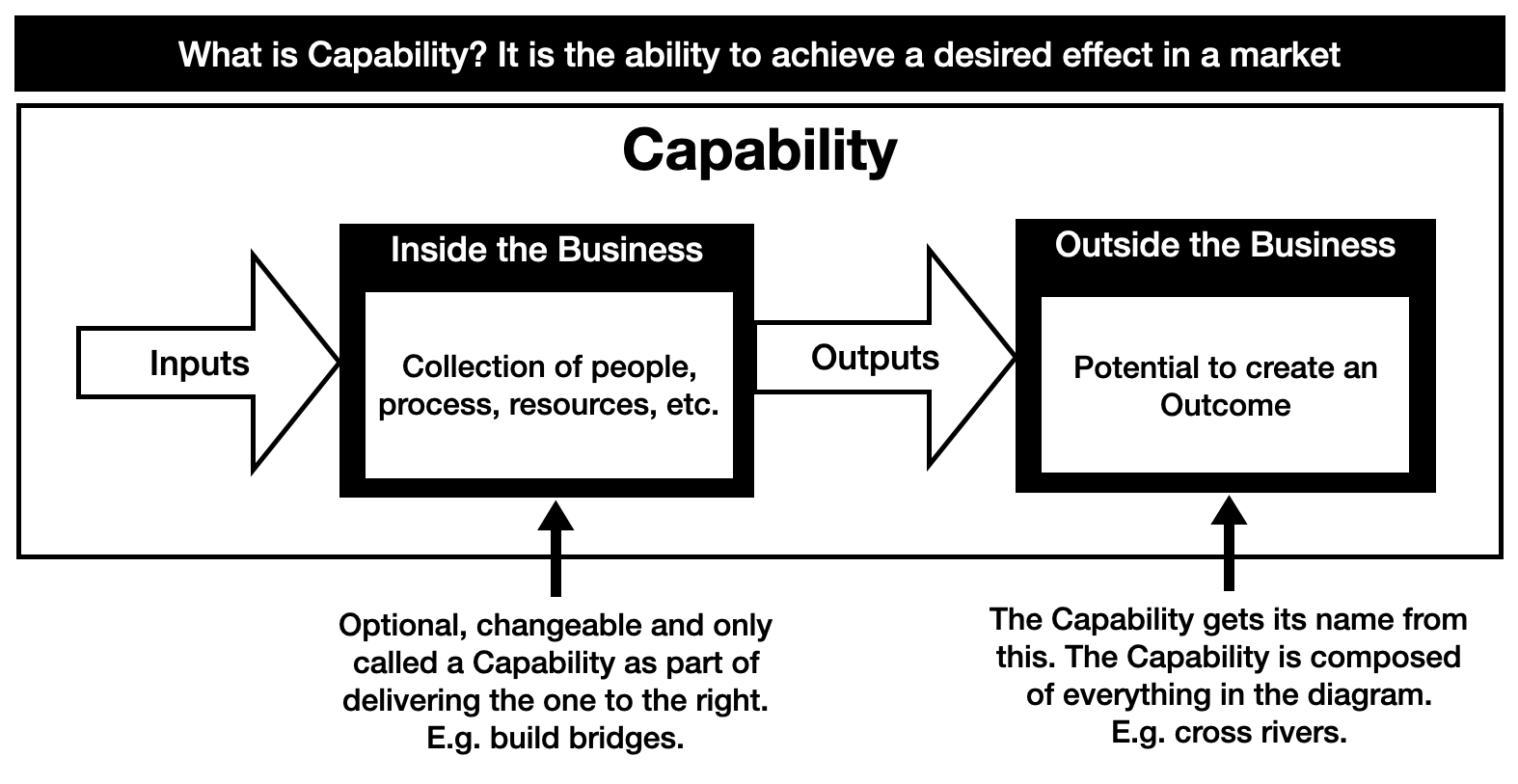
22 May 2026 — Capability is about creating a desired effect externally. The below is an old Ministry of Defence example but the same applies to business and other organisations. In the military, a Capability is an ability to create a desired effect on the battlefield. In business, a Capability is an ability to create a desired effect in a market.

23 May 2026 — “The greatest products of architecture are less the works of individuals than of society; rather the offspring of a nation’s effort, than the inspired flash of a man of genius…” — Victor Hugo
24 May 2026 — The architecture of an enterprise can be described. Enterprise Architecture is a formal method to produce that description and thereby design an enterprise. This is done using a model. For business stakeholders, the model gives deep insight into how the new enterprise will operate, what resources it needs and the intended outcomes. For IT stakeholders, it gives deep insight into the systems needed to support those business operations. It is all one coherent design.
25 May 2026 — Capability is what makes a business successful in its markets.
26 May 2026 — If your architecture includes something clever that a casual observer might not notice immediately, you need to improve your architecture. The cleverness is not the problem.
27 May 2026 — Strange but true: we’re taught from an early age that it’s bad to stare out of the window when you’re supposed to be working. Yet, metaphorically, an architect must do it frequently. The reason we make changes to an enterprise should mostly be because of what is happening outside of the enterprise.
28 May 2026 — Learn to express architecture in simple terms. Use small words to paint big ideas. Because your stakeholders have to understand and be inspired. They must be able to explain your architecture to others.
29 May 2026 — Part of the point of Enterprise Architecture is to know enough about all of the domains that you can see the elephant. You can spot the people wearing blindfolds because they’re the ones who say things like, “the business is really all about Sales” or “the business is really all about Finance” or “the business is really all about IT”. The business is about the sum of them all.

30 May 2026 — “The secret of architectural excellence is to translate the proportions of a dachshund into bricks, mortar and marble.” — Christopher Wren
31 May 2026 — If you think you know more than your stakeholders about their part of the enterprise… you don’t and that’s a fast way to end up looking for a new employer. Enterprise Architecture is a team effort and everyone brings their domain knowledge. The architect’s domain knowledge is architecture. Make sure the stakeholders are recognised for their part in making the architecture strong, useful and elegant.
01 Jun 2026 — Measuring stuff inside the organisation is easy. Measuring stuff outside the organisation is hard. But your focus must be on the outside if you want to win your markets.
02 Jun 2026 — The stories of AI deleting company databases or wiping drives should make every Security Architect demand Zero Trust. Preventing dangerous actors from entering your network is one thing. It’s when they are already on your network that you really have to worry. Just as a typical employee can make a mistake, so too can an AI. Only AI has no caution or remorse.
03 Jun 2026 — Enterprise Architecture as a concept was only a theory before the late 80s. No one had successfully married all the different concerns. Zachman was the first to show a way but it was very low resolution. By the end of the 90s, others had developed high-resolution ways to architect an enterprise. By the mid noughties, those high-resolution ways were mature.
04 Jun 2026 — Every second you waste by not having a complete model of your enterprise is a determined step to allow competitors to overtake you.
05 Jun 2026 — What most IT people call Enterprise Architecture is really Enterprise IT Architecture because IT is all they understand. But their entire approach can only create a useless ivory tower. Get your Solution Architects to use Environment Diagrams (aka System Context Diagrams) and you can do away with that useless EITA ivory tower.

06 Jun 2026 — “As we live and as we are, Simplicity — with a capital ‘S’ — is difficult to comprehend nowadays. We are no longer truly simple. We no longer live in simple terms or places. Life is a more complex struggle now. It is now valiant to be simple: a courageous thing to even want to be simple. It is a spiritual thing to comprehend what simplicity means.” — Frank Lloyd Wright
07 Jun 2026 — Enterprise Architecture takes a while to sink in. It took me more than a year of working with a complete model of an enterprise along with possibly the best mentors in Europe. They had to be very patient with me. Build a complete model of your enterprise, work with it and be patient with yourself. It will not happen overnight. But it will sink in and your whole world will change.
08 Jun 2026 — A building architect’s plans and models are not the building. An Enterprise Architect’s models are not the enterprise. Yet they are descriptions that are fundamental to success.
09 Jun 2026 — As an Enterprise Architect, do you have to know everything about how to design an enterprise? Yes and no. Yes, you have to know everything about the design process. No, you don’t have to know about what to design because that’s the stakeholders’ expertise.
10 Jun 2026 — Does an Enterprise Architect make decisions for senior management and directors? Yes. But decisions are not made in isolation. The architect is not a dictator. The decisions will be reviewed and can be changed by the people who will be accountable for the enterprise.
11 Jun 2026 — Would you work on the top floor of a skyscraper that wasn’t designed by an architect? Probably not. For you to have confidence in it, it would have to be massively inefficient and over-engineered. We see the same in enterprises because most were not designed by an Enterprise Architect.
12 Jun 2026 — The two fundamental structures within organisations that can be architected are the Operating Model and the Business Model. Those structures are intimately connected, each strongly influences the other.
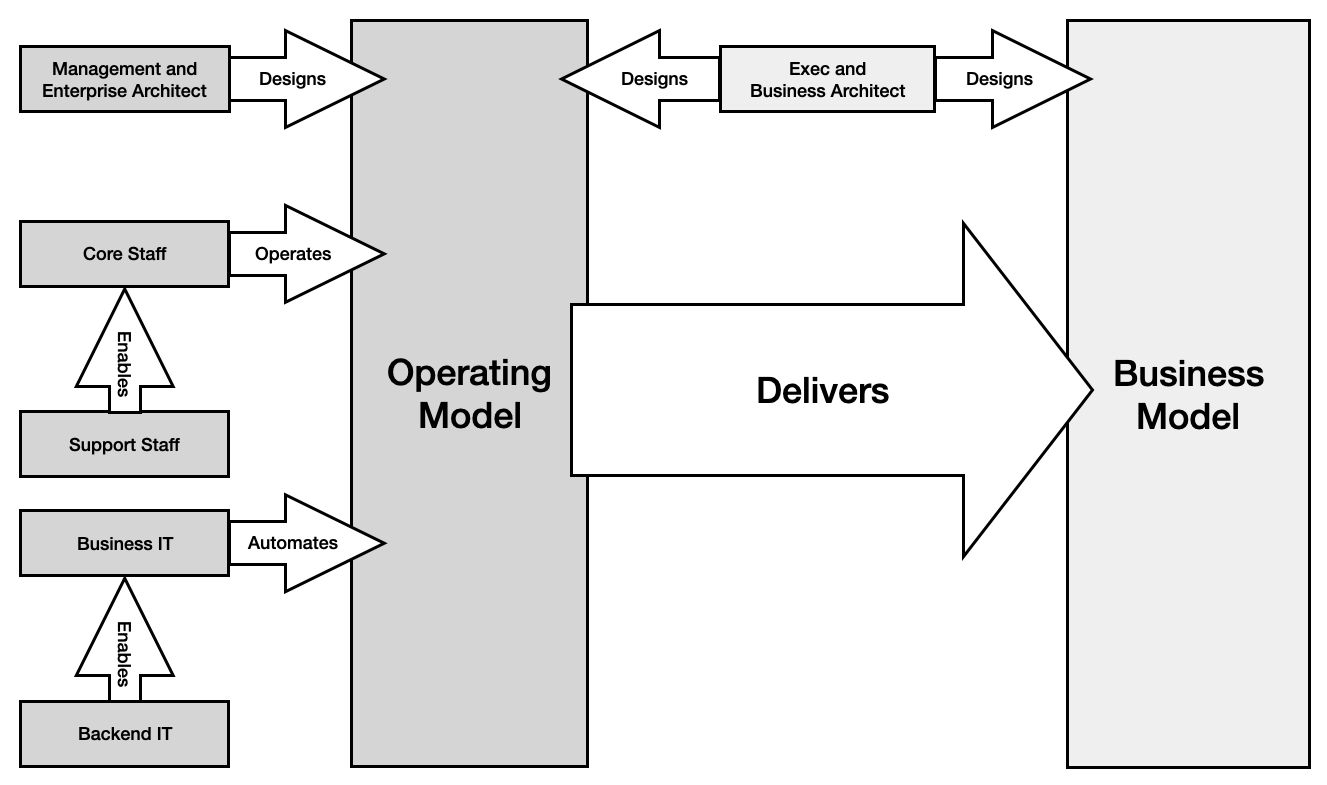
13 Jun 2026 — “For centuries architects have been taught to sketch, model and build in three static dimensions – x, y and z. But the natural world offers contexts that are much more dimensionally complex and dynamic.” — Neri Oxman
14 Jun 2026 — Enterprise Architects famously are usually T-shaped in terms of their skills. But did you know executive and senior management decisions are usually T-shaped too? They are often decisions that spread across the upper levels and reach down the levels to very specific parts of the detail but ignore everything to the sides of that detail. The impacts of what happens to the sides is often key to successful architecture.
15 Jun 2026 — The architecture of the enterprise includes using the 75% to describe all of the management and executive structure, how they see the organisation and their governance structures.
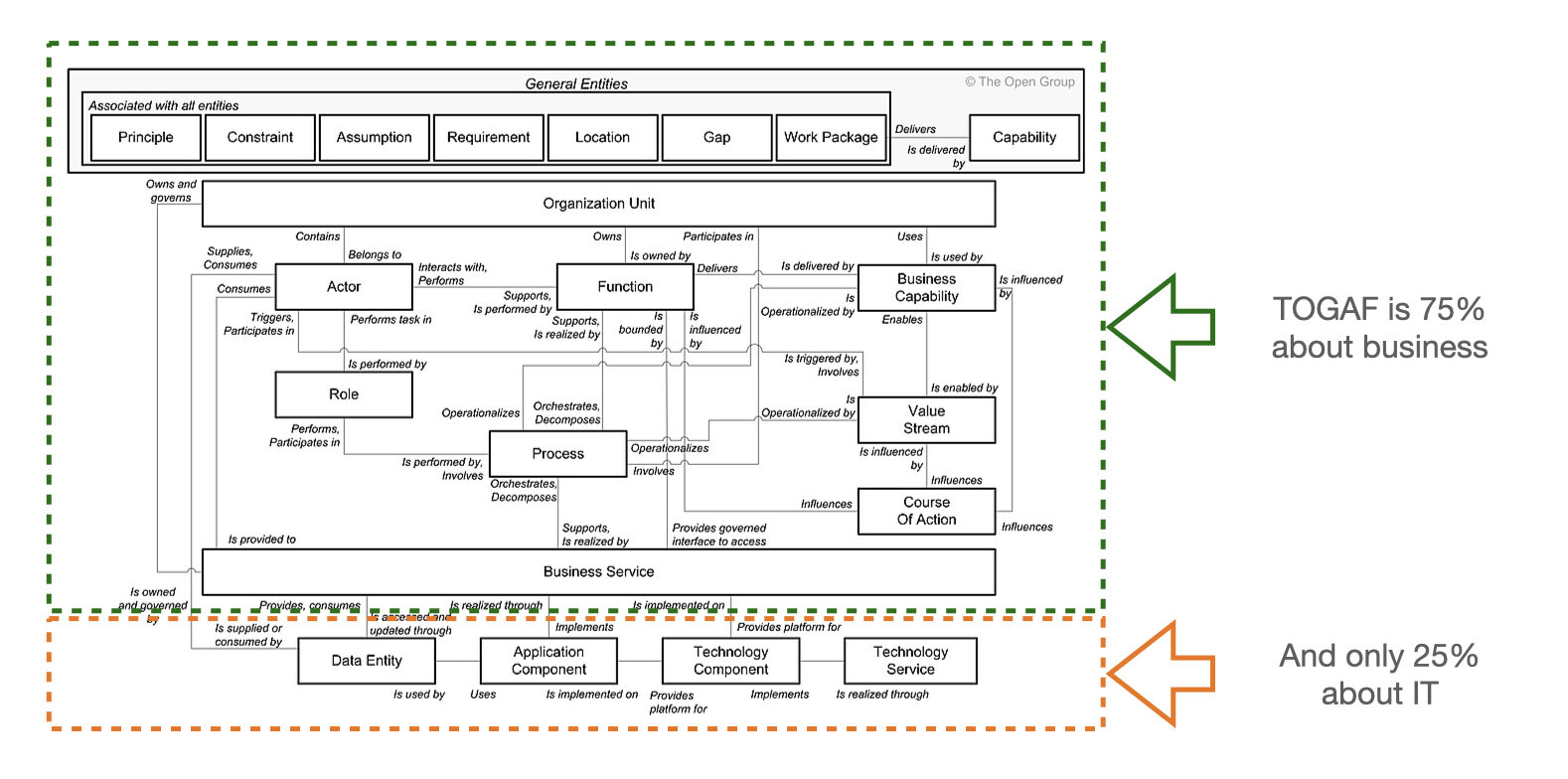
16 Jun 2026 — Enterprise is a word defined in law. Those legally defined things have a structure. That structure can be designed. Enterprise Architecture is a formal discipline to produce that design. It is distinct from earlier management techniques for deciding the structure in that EA has vastly improved formal methods for dealing with the complexity of the design.
17 Jun 2026 — An enterprise can be described by the products and services it offers. It can be described by the people, process and resources it employs to produce those. It can be described by the structure and skills of its people. It can be described by the what it does in its markets. Enterprise Architecture is when you put all of these descriptions and more together and show how they are all linked.
18 Jun 2026 — Enterprise Architecture is the best and possibly only way to create an integrated management system that works. All of the management systems, their standards, etc. rolled into a single complete model of the enterprise.
19 Jun 2026 — Enterprise Architecture can be used to describe the entire enterprise from top to bottom including all of the management systems. By showing how all of the management systems can be integrated, it can lead to significant improvements to the structural design of the enterprise.

20 Jun 2026 — “Intelligent people talk about very complex things using very simple terms and unintelligent people talk about simple things using very complex terms.” — C. Stavri
21 Jun 2026 — The primary deliverable for an Enterprise Architect is a structural design of the enterprise. The production of that design involve a huge amount of teamwork because all of the stakeholders have requirements for the design.
22 Jun 2026 — Done properly, one of the few genuine Capabilities internal to an organisation is the Enterprise Architecture practice. Its market is the rest of the organisation.
23 Jun 2026 — Governance, Risk Management and Compliance (GRC) was born out of the Enron scandal and is intended to protect against internal fraud and corruption. It is a senior management approach designed to ensure correct governance and regulatory reporting. It is nothing to do with IT security. If you lead a regulated organisation.and your only GRC people are in IT security, how would you know if there was internal fraud or corruption?
24 Jun 2026 — Some are obsessed with Enterprise Architecture Governance and Architecture Review Boards… and the same people seem certain they deserve a Seat At The Table. The answer is those are mutually exclusive. No one wants the architecture police at the table.
25 Jun 2026 — Archimate is terrible for designing business operations. On the other hand, it’s also terrible for designing IT operations. But at least it’s also terrible for Data structures and hardware so it is consistent.
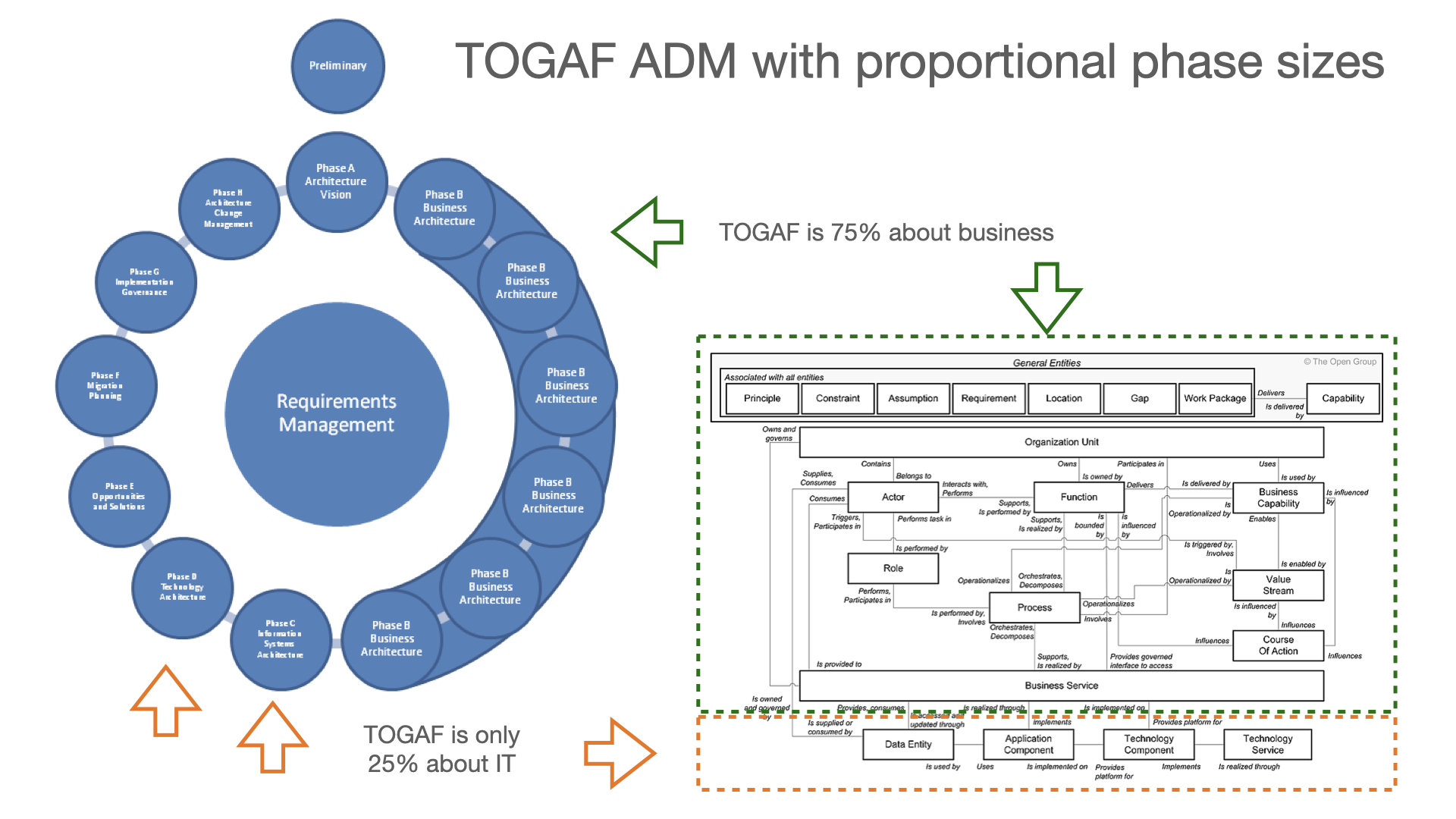
26 Jun 2026 — The circles of the TOGAF ADM diagram are all the same size but the reality is they should all be different sizes.
27 Jun 2026 — “Architects, if they are really to be comprehensive, must assume the enormous task of thinking in terms always disciplined to the scale of the total world pattern of needs, its resource flows, its recirculatory and regenerative processes.” — Richard Buckminster Fuller
28 Jun 2026 — The only way to be an Enterprise Architect is to architect enterprises. It requires the skill to build a complete model of the enterprise. It requires the skill to work and negotiate with the stakeholders to redesign the enterprise by re-architecting that model. It requires the skill to communicate the new design to the project and programme teams so it can be built. It requires the skill to oversee the construction of the new or revised enterprise.
29 Jun 2026 — It is possible to understand every component used in Enterprise Architecture to an expert level and still not understand EA. Because EA is about how those components are assembled in order to produce the design of an enterprise.
30 Jun 2026 — The CEO decides strategy. The CTO decides IT strategy. The COO decides business planning. The CIO decides IT planning. The Enterprise Architect helps make those decisions and ensures they are all aligned.
01 Jul 2026 — Architectural changes can start from anywhere but, when it starts at or near the top, it often comes with a particular key stakeholder in mind. Learn how to design architecture around the talents of that kind of person.
02 Jul 2026 — When someone says, “Enterprise Architecture is a governance function”, you are free to point and laugh at them. Enterprise Architecture is an architecture function.
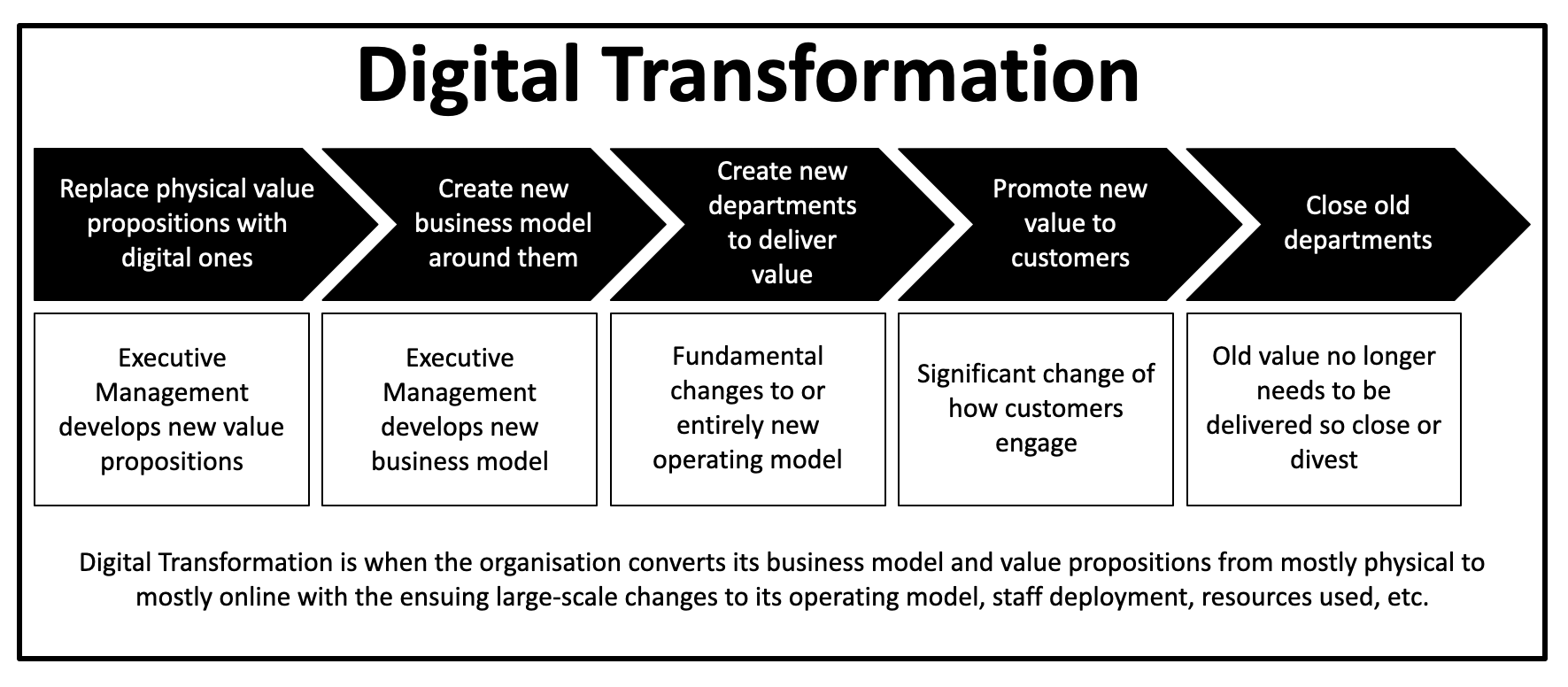
03 Jul 2026 — Digital Transformation is an executive management approach that leads to massive changes within the organisation. It usually means several old departments are dismantled. Several new departments are created. Not to replace the old departments but to do new things the organisation has never done before. Hence transformation.

04 Jul 2026 — “Architecture should have little to do with problem solving – rather it should create desirable conditions and opportunities hitherto thought impossible.” — Cedric Price
05 Jul 2026 — The architecture of an enterprise is nothing like software architecture and you must treat it very differently. Unlike software, you can’t do an overnight update. All of the employees need to keep working while you steadily roll out your changes. That means you architecture has to be designed for phased roll out. Probably for phased development. You might still be working on parts of the design as the roll outs begin.
06 Jul 2026 — It’s all very well assuming large parts of the workforce will have their current roles replaced by AI… but will it actually be cheaper when the bill comes due? Because a data centre with a square kilometre of the most expensive chips on the planet sucking up the power of a medium-size city… the current price is low to hook you but someone has to pay for it eventually. And that will be you, the customer of the AI company.
07 Jul 2026 — A complete model of the enterprise’s architecture necessarily includes all of the structural things needed for the successful operation of the enterprise.
08 Jul 2026 — When you are a consultant, you have to accept that your customers will misuse terms. Often badly. But the customer is always right so you must accept the misuse. However, you might want to advise them that others use the terms differently and that it would be to their long term interest to adopt the standard definitions. This is perhaps more true in Enterprise Architecture than any other discipline.
09 Jul 2026 — All AI answers are hallucinations and some are closer than others to what humans hallucinate.

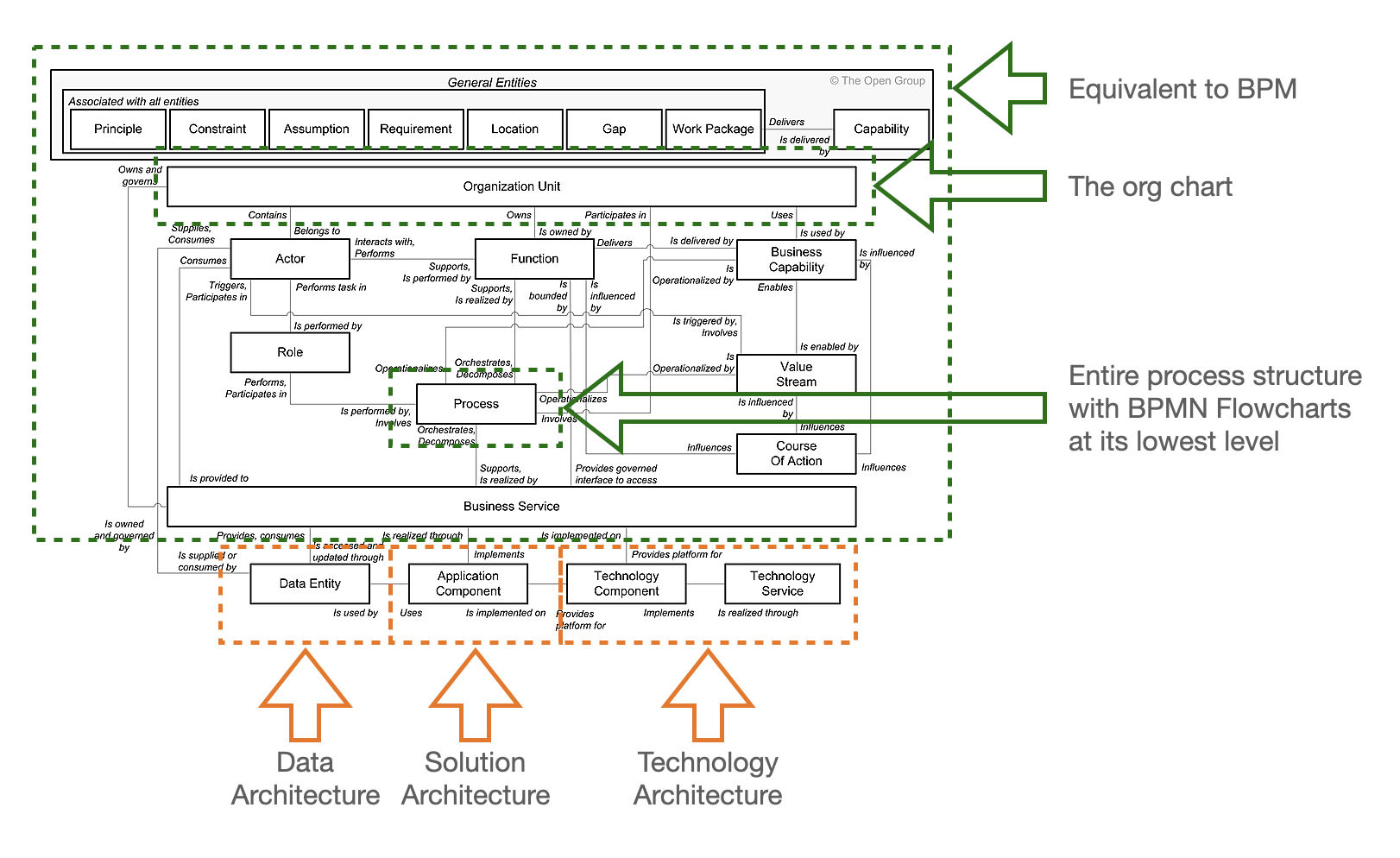
10 Jul 2026 — What TOGAF calls Business Architecture is essentially an evolution of Business Process Management. It needs the same skill sets of working with senior management stakeholders to develop the model of the business. It also means working with junior stakeholders like Business Analysts who will develop detail such as flowcharts. Then working with the IT stakeholders who develop their architectures to suit.
11 Jul 2026 — “For not all things are practicable on identical principles, but there are some things which, when enlarged in imitation of small models, are effective, others cannot have models, but are constructed independently of them, while there are some which appear feasible in models, but when they have begun to increase in size are impracticable, as we can observe in the following instance.” — Vitruvius
12 Jul 2026 — It can be hard for executive management to see the advantages of any significant change to the organisation. Some will struggle to understand it, others might have a vested interest in it retaining its inefficient current structure. It is up to you as an Enterprise Architect to work on your power of persuasion to let them see those advantages. To develop a strong skill in negotiation to find a win-win for those with vested interests.
13 Jul 2026 — Fire fighters train for fires. The military trains for both attack and defence. And so on. How many teams within your enterprise need to do the same and how much does your architecture need to accommodate the equivalent of fire drills?
14 Jul 2026 — If it were any kind of system at all, an enterprise would be a Value Creation system. But an enterprise is not a system, it is an enterprise.
15 Jul 2026 — A Solution Architect designs a solution for a set of business requirements. An Enterprise Architect designs an enterprise. One or more parts of that enterprise may have business requirements that can be solved by one or more Solution Architects. Far more of that enterprise should reuse previous solutions.
16 Jul 2026 — If someone tries to teach you that Enterprise Architecture is about IT, you should demand a refund. Enterprise Architecture is a formal discipline to design an enterprise. The hint is in the name.
17 Jul 2026 — Digital Transformation is possibly the largest change of working practices and workforce an organisation will ever go through in its history.
18 Jul 2026 — “The architects who benefit us most maybe those generous enough to lay aside their claims to genius in order to devote themselves to assembling graceful but predominantly unoriginal boxes. Architecture should have the confidence and the kindness to be a little boring.” — Alain de Botton
19 Jul 2026 — Can your Enterprise Architecture design support a significant change to the business model? That requires flexibility and there is always a tension. The more flexible the architecture, the more it costs to build and operate. The more tailored the architecture, the slicker the operation and often the greater profit. But markets change so a tailored architecture can trap you in a disappearing segment. It’s not your job as EA to decide between flexible or tailored but it is your job to help the key stakeholders make a good decision.
20 Jul 2026 — Once the model of the To-Be is finished, it should be turned into one or more sets of deliverables for the project management teams. That is a core part of Communication of the architecture.
21 Jul 2026 — The closer an employee gets to seeing the value they create in the hands of a customer, the more likely to be satisfied that employee will be with their role. It is part of your job as an Enterprise Architect to help them see it. It is a bigger part of your job as an Enterprise Architect to bring them closer so they can see it easily.
22 Jul 2026 — How should you deal with Risk at an architectural level in an enterprise? Identify potential risk events and wire in controls for them. Monitor the risk. Actively prevent the risk event. Recover from the risk event if you can’t prevent it.
23 Jul 2026 — Enterprise Architecture comes under Planning not Strategy. However, in order for Strategy to be a success, Planning has to be not only possible but preferably a strong match for the existing enterprise.
24 Jul 2026 — Governance, Risk Management and Compliance was created to prevent large-scale corporate fraud. Its purpose is to oversee the entire organisation and particularly the leadership.
25 Jul 2026 — “So too, in some models it is seen how they appear practicable on the smallest scale and like wise on a larger.” — Vitruvius
26 Jul 2026 — Most things are built to a specification and a good Enterprise Architect builds in plenty of tolerance to allow for misuse. But some things are not easy to foresee and will be vastly outside the specification. In structural engineering, there are plenty of examples of bridges built that allowed for more than double the specified weight load and still be safe… only to find on opening day that so many people wanted to use the bridge at once it meant triple the specified weight and disaster. So don’t just design for tolerance, design to prevent breaches of those tolerances.
27 Jul 2026 — Most people who want a seat at the table also hate MBA-speak. Those are mutually exclusive things. MBA-speak is the language of business and it is business that is discussed at the table.
28 Jul 2026 — Alignment is not when one domain fulfils the requirements of another domain. Alignment is when all domains are adjusted so they make sense to each other.
29 Jul 2026 — The fundamental structure underneath an enterprise is the operating model. That structure delivers a different structure — the business model. You might think those two are enough to describe everything but it’s not even close. Which you will quickly discover if there’s nowhere inside the location or nearby to get lunch.
20 Jul 2026 — If you are concerned you have been given the job title Enterprise Architect without being able to, you know, architect an enterprise, by far the best way out of that situation is to learn. Will it be hard? Yes. Will it be worth it? Also yes.
31 Jul 2026 — An Enterprise Architect designs the whole structure with the domain architects effectively as assistants who design parts of the structure.
01 Aug 2026 — “A half inch, inch, or inch and a half hole is bored with an auger, but if we should wish, in the same manner, to bore a hole a quarter of a foot in breadth, it is impracticable, while one of half a foot or more seems not even conceivable.” — Vitruvius
02 Aug 2026 — The designer of a race car and its driver are seldom the same person. Why? Because they’re two completely different skills. But they must have strong communication with each other to make a winning race team. It’s the same in Enterprise Architecture. An EA does not have to be a skilled manager or make deals with customers or decide which markets to enter. But an EA must be able to have deep conversations and understand the concerns of those who do in order to make a winning team.
03 Aug 2026 — Why do stakeholders change their mind so often? Because one of several things has happened. They might have got a better grasp, had an insight, made a bad assumption the need to correct, the market might have changed, new talent might have arrived, etc. There are a million reasons why stakeholders can change their mind and it often happens after the architecture has left development and gone into the build phase.
04 Aug 2026 — Which processes should be emphasised in your enterprise’s architecture model? The ones your stakeholders think are most important.
05 Aug 2026 — Good building architects don’t design walls and floors, they design spaces and flow. A good Enterprise Architect does something similar.
06 Aug 2026 — Enterprise Architecture is not the structure of the IT systems in an organisation. It is not Information Systems Architecture. Perhaps the funniest thing about the IT people who try to say otherwise is they haven’t even noticed an enterprise’s IT has not had an architecture since the days of the mainframe.
07 Aug 2026 — The Requirements Management at the centre of the TOGAF Architecture Development Method is about the fact that all of the phases generate requirements. Before Enterprise Architecture, the norm was for Business Analysts to analyse the work of managers and business planners. Whereas in EA, the managers and business planners are stakeholders in the Vision and Business Architecture phases where the main requirements are generated.
08 Aug 2026 — ‘There exists in such a case a certain institution or law; let us say, for the sake of simplicity, a fence or gate erected across a road. The more modern type of reformer goes gaily up to it and says, “I don’t see the use of this; let us clear it away.” To which the more intelligent type of reformer will do well to answer: “If you don’t see the use of it, I certainly won’t let you clear it away. Go away and think. Then, when you can come back and tell me that you do see the use of it, I may allow you to destroy it.”’ — Chesterton’s Fence, G.K. Chesterton
09 Aug 2026 — When a stakeholder changes their mind during the Enterprise Architecture development phase, that’s cheap and easy to fix. Once the architecture moves into the build phases, things can get harder and more expensive. Should the architecture change? Should the build be stopped? Maybe. Or maybe there’s a way to adjust. Or even to keep going by reframing the stakeholder’s change. As an Enterprise Architect, you must be able to find the best options.
10 Aug 2026 — In general, the word “architect” means someone who plans, designs and oversees the construction of complex structures. An Enterprise Architect does that for enterprises. In order to do that, the EA must be able to describe the enterprise in such a way that the key stakeholders understand what they are signing-off.
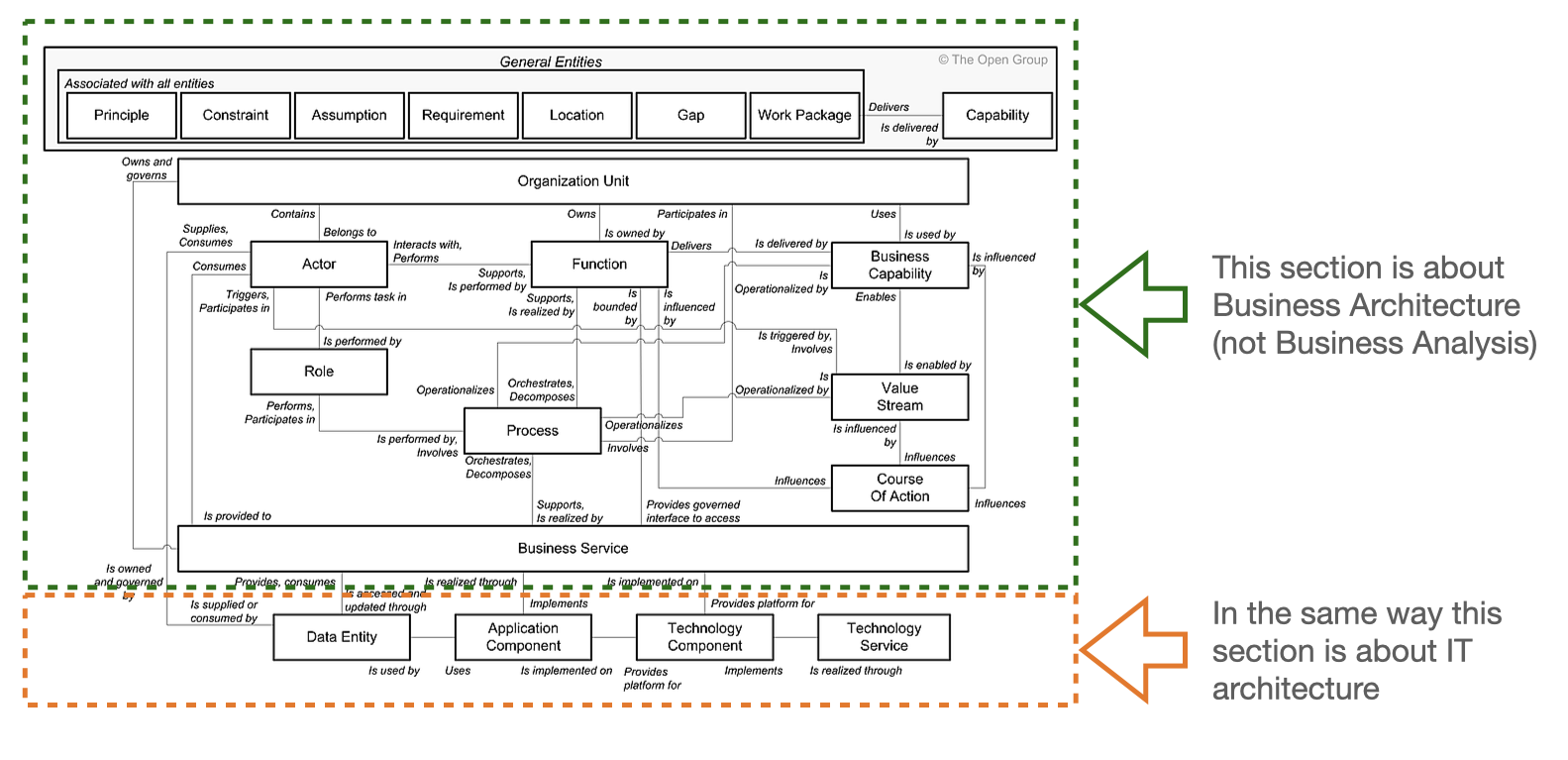
11 Aug 2026 — Business Architecture and Business Analysis are two different subjects. A Business Analyst cannot easily become a Business Architect, it takes years of retraining and possibly an MBA course. Skill in Business Architecture is an absolute requirement to be an Enterprise Architect.
12 Aug 2026 — There are many ways to orient the architecture of an enterprise — process, capability, value, people/talent, etc. — and you might end up with stakeholders wanting all of those and more. You can only orient by one of them but the rest can be produced using Views.
13 Aug 2026 — Archimate turns even the simplest architecture into complex diagrams no one can understand.
14 Aug 2026 — Capability is mostly about what happens outside the business.
15 Aug 2026 — “Nothing is particularly hard if you divide it into small jobs.” — Henry Ford
16 Aug 2026 — The concerns of a typical employee are different from the concerns of their team leader are very different from the concerns of their manager and so on up the management hierarchy. That employee might never have spoken with their head of department who likely has vastly different concerns and possibly little idea what the employee does. This is the environment where Enterprise Architecture works. The concerns of the head of department are the concerns of the Enterprise Architect and Business Architect. Whereas the concerns of the employee are the concerns of the Solution Architect and Business Analyst.
17 Aug 2026 — For it to be architecture, there has to be structure. All of the plans and documents and other artefacts connected together to form a single, coherent design.
18 Aug 2026 — Enterprise Architecture is not about governance or review boards or compliance with standards. If you want to become a policeman, join the police. Enterprise Architecture is about producing structural designs of enterprises.
19 Aug 2026 — Capability is about the desired effects you can create in a market. It’s a notional concept. It exists in the gap between your organisation and its customers. The collection of things used to create the desired effect can also be called the Capability but only if they create that desired effect. Such is the nature of the English language and people using it badly. At some point long ago, the two different concepts of Desired Effect and the collection of things that deliver the Desired Effect were merged.
20 Aug 2026 — If you can replace a notional concept with a real concept, that is exactly what you should do. Notional concepts are fuzzy. Notional concepts should usually only be used as glue to hold together two real concepts. Because what do you think happens if you try to design a structure by first describing the glue?
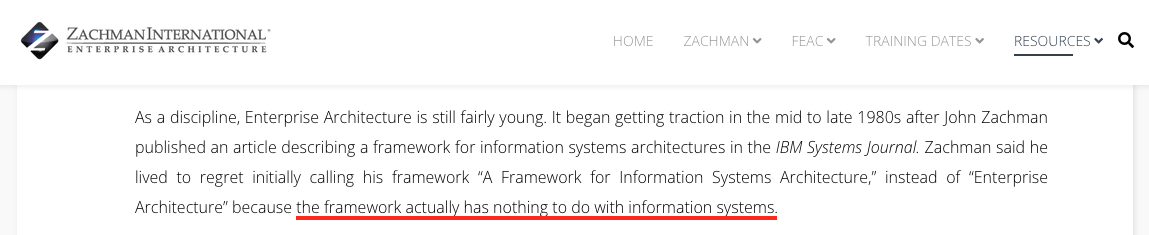
21 Aug 2026 — Enterprise Architecture is not about information systems, it is about the structure of the enterprise. If you don’t believe me, believe Zachman.
22 Aug 2026 — “Architecture is what nature cannot make. Architecture is something unnatural but not something made up.” — Louis Kahn
23 Aug 2026 — “Enterprise is a word defined in law. Those legally defined things have a structure. That structure can be designed. Enterprise Architecture is a formal discipline to design that structure.” Why is this a frequent refrain? Because there are many who talk the talk — misuse EA terms and even the job title — without being able to walk the walk. The quote lets everyone know who is who.
24 Aug 2026 — There is no shortcut. The ability to architect an enterprise comes mostly from decades of practice and experience in doing the work. The sooner you start, the sooner you will have it.
25 Aug 2026 — Enterprise Architecture starts before the development of strategy is complete. EA creates a vision. When it is agreed the vision matches the strategy, EA designs an outline of the business domain needed to fulfil the vision. And so on.
26 Aug 2026 — Architects by their nature are people who try to make new rules and bridle at following bad old rules.
27 Aug 2026 — One way to spot architects who are low quality is they try to use things like TOGAF buzzwords with stakeholders. If you’re going to interview an architect for a role, try to include a business stakeholder stage… using only business language.
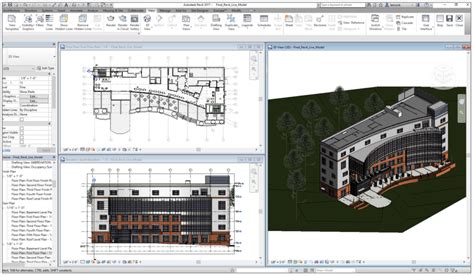
28 Aug 2026 — Enterprise Architects build a model of the enterprise in an EA tool for the same reasons as building architects build a model of a building in a BIM tool like Revit. Being able to see the model and query it allows all of the the stakeholders to make better decisions.
29 Aug 2026 — “Strategy specifies a competitive outcome you wish to achieve.” — Roger Martin
30 Aug 2026 — How did Enterprise Architecture go from being about IT to being about the structure of the whole organisation? When the first true EA tools arrived, Business Analysts populated them with the things the business stakeholders designed so IT systems could be planned. Executive management realised the tools were useful for other things they needed and started to use the tools themselves for the high level stuff — Business Architecture. That change in who was using the EA tools — not just one or two people but teams that included executive management — led to Enterprise Architecture becoming the holistic subject it is today.
31 Aug 2026 — An enterprise’s architecture is fundamentally about how it takes value from suppliers and uses its core competencies to transform it into value for its customer markets. Emphasis on the “how” which can involve structuring the work of thousands of employees.
01 Sep 2026 — What most people claim as a Capability Map is identical to an old, abandoned British business design artefact called a Function Map. They were abandoned for a reason. If you cannot explain why they were abandoned and what you are doing that is different, your company will learn the hard way why we abandoned them.
02 Sep 2026 — Separating the wheat from the chaff in Enterprise Architecture literature is close to impossible because one architect’s wheat is another’s chaff. Stay pragmatic. Unless it will help you with a current problem or potentially get you a raise, let someone else read it.
03 Sep 2026 — It’s well known that 80% of “Enterprise Architects” have no idea how to architect an enterprise and have certainly never done it. Many even claim an enterprise cannot be architected… despite the fact there are those in the 20% who can do it. So next time someone is skeptical of “experts”, cut them some slack because what if other professions are just as bad?
04 Set 2026 — What TOGAF calls Business Architecture is an evolution of Business Process Management. The structural design of business operations is the first architectural phase in TOGAF’s Architecture Develop Method (ADM).
05 Sep 2026 — “However beautiful the strategy, you should occasionally look at the results.” — Winston Churchill
06 Sep 2026 — Many people prefer the older definition of Strategy by Roger Martin but the new one cuts to the chase. Some struggle to see how it’s Strategy because it sounds a bit like Marketing. But remember that all of the outward facing departments are trying to compel customer action. Inside the organisation, it can seem a little distant. How does some average internal process compel customer action? The truth is, most don’t but are instead neutral. How do you know? Because you can lay a bet you can change almost any process in such a way that it would upset customers even if it’s several layers away from direct contact. You probably can spot those kind of bad changes instinctively. Which means you can work towards finding the good changes instinctively too. They’re mostly in the same place.
07 Sep 2026 — Allow some wiggle room in your designs. That usually means strongly defining the boundaries and interaction points but allowing the project teams to have a lot of freedom within those boundaries.
08 Sep 2026 — Enterprise Architecture is unusual in that so many understand all of its conceptual parts but so few understand the sum. It’s possible that the only way to understand EA is to use the parts to build the whole.
09 Sep 2026 — AI is expensive and of questionable use for deterministic processes. Its statistical nature means you won’t always get the deterministic result you want and standard software (or even standard humans) will mostly be a better bet. So make a good choice about when to use it unless you want your opex to spiral upwards.
10 Sep 2026 — Problems that went unrecognised for years do not necessarily need to be resolved quickly either. If you were given the job title Enterprise Architect but cannot architect enterprises, there are two simple ways out of that problem. First, find a more accurate job title, wait for the appropriate moment and ask for the change. Second, you could learn to architect enterprises. Please at least try the latter. Here to help if you do.
11 Sep 2026 — What happens if you change the size of the ADM circles to the correct proportions in relation to its metamodel?
12 Sep 2026 — “And so, if any one pays attention to these directions, and by selection adapts their various principles to a single structure, he will not be in need of further aids, but will be able, without hesitation, to design such machines as the circumstances or the situations demand.” — Vitruvius
13 Sep 2026 — Enterprise Architecture began in the late 80s and evolved into its final form in the late 90s. It matured through the noughties. My training in EA started in 2010 and it was upsetting to me that somehow I had missed getting involved in it for so long. But not as upsetting as the discovery there were still people using the 80s version and ignorant of all of its evolution. And that’s not as upsetting as the discovery that there are even more people who don’t even know that much yet claim to be experts.
14 Sep 2026 — Enterprise Architecture is fundamentally an internal consultancy. Without it, the design of the enterprise sits in people’s heads but the complexity means no one’s head can hold it all… which means mistakes and poor design creep in. Whereas EA makes the complete structural design is visible to everyone… which makes it far easier to get it right.
15 Sep 2026 — If the only people who can understand what you are talking about are those who have studied Enterprise Architecture for years, you need to dial it back and learn Plain English. Because two thirds of EA is about communication with stakeholders.
16 Sep 2026 — The prime purpose of Enterprise Architecture is to describe a future design of the enterprise. To get to that future enterprise will require projects. So the second purpose of EA is to help describe what projects will be needed and what they will need to deliver.
17 Sep 2026 — The claim that Enterprise Architecture is an IT discipline is a hugely popular emperor with no clothes. It never had any clothes. But very important IT bigwigs claim the emperor is wearing finery so IT people across the world are too afraid to admit they can’t see the clothes. They proclaim how wonderful the emperor looks and learn an EA framework that is useless to them.
Leave a Reply
You must be logged in to post a comment.